There's a lot to think about before renovating a hotel. Budgets, timelines, brand requirements, furniture selections, and the big question of how to get it all done while guests are still checking in.
And then there are the things you don't think about until you're in the middle of it. Like where to store 100 mattresses when they're delivered before the rooms are ready. Or how to replace the carpet in a hallway when guests still need to get to their rooms.
We sat down with a few of our Project Managers, our Logistics Manager and our Construction Manager at Furniture Industries to talk about what they've learned from years of hotel renovations.
Here are five questions every hotel owner should ask before getting started.
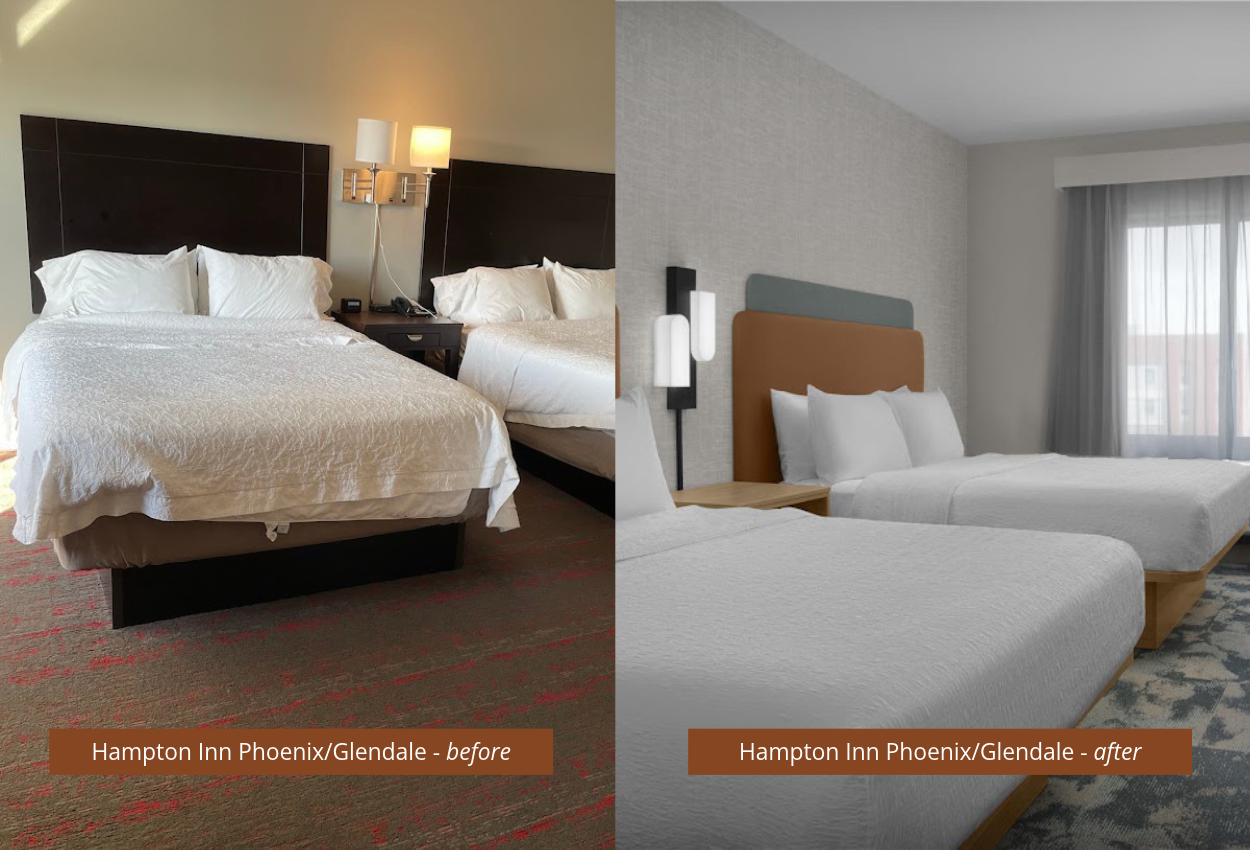
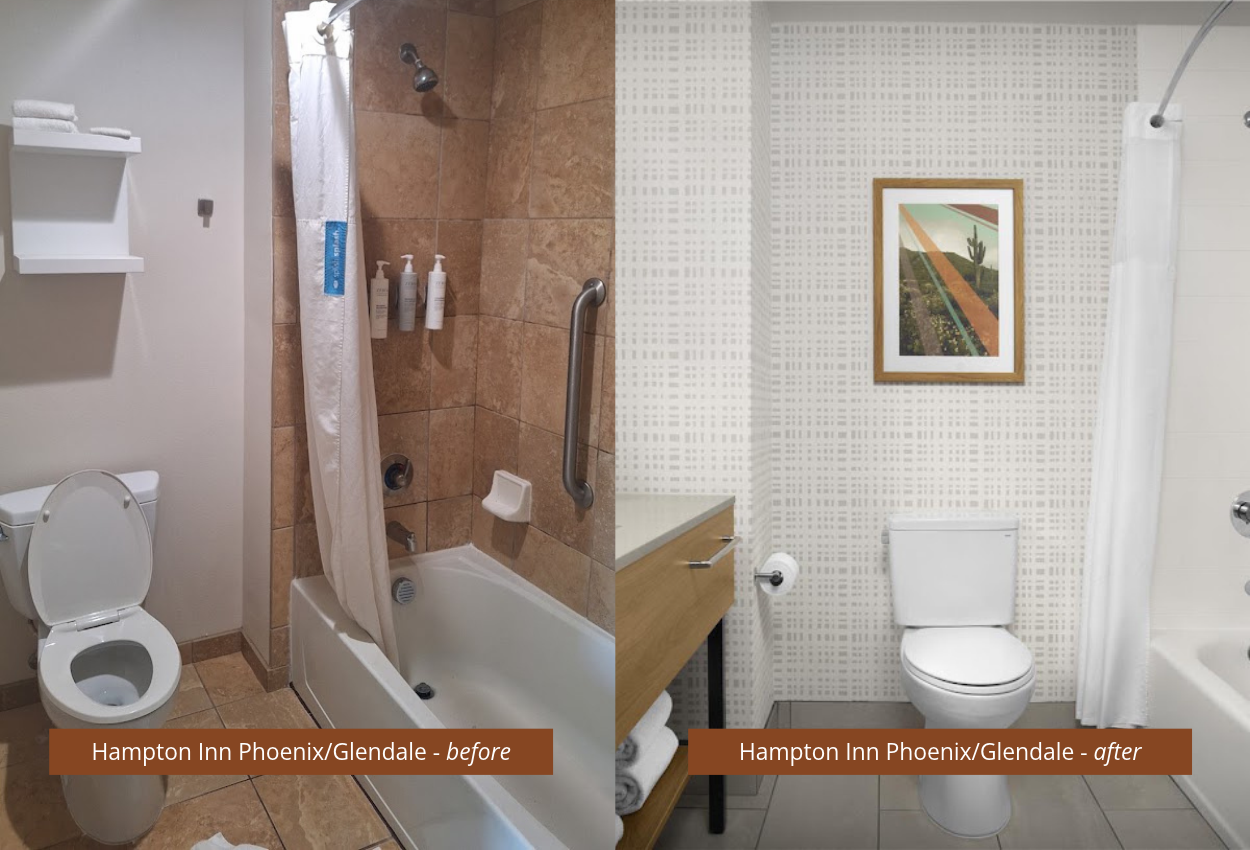
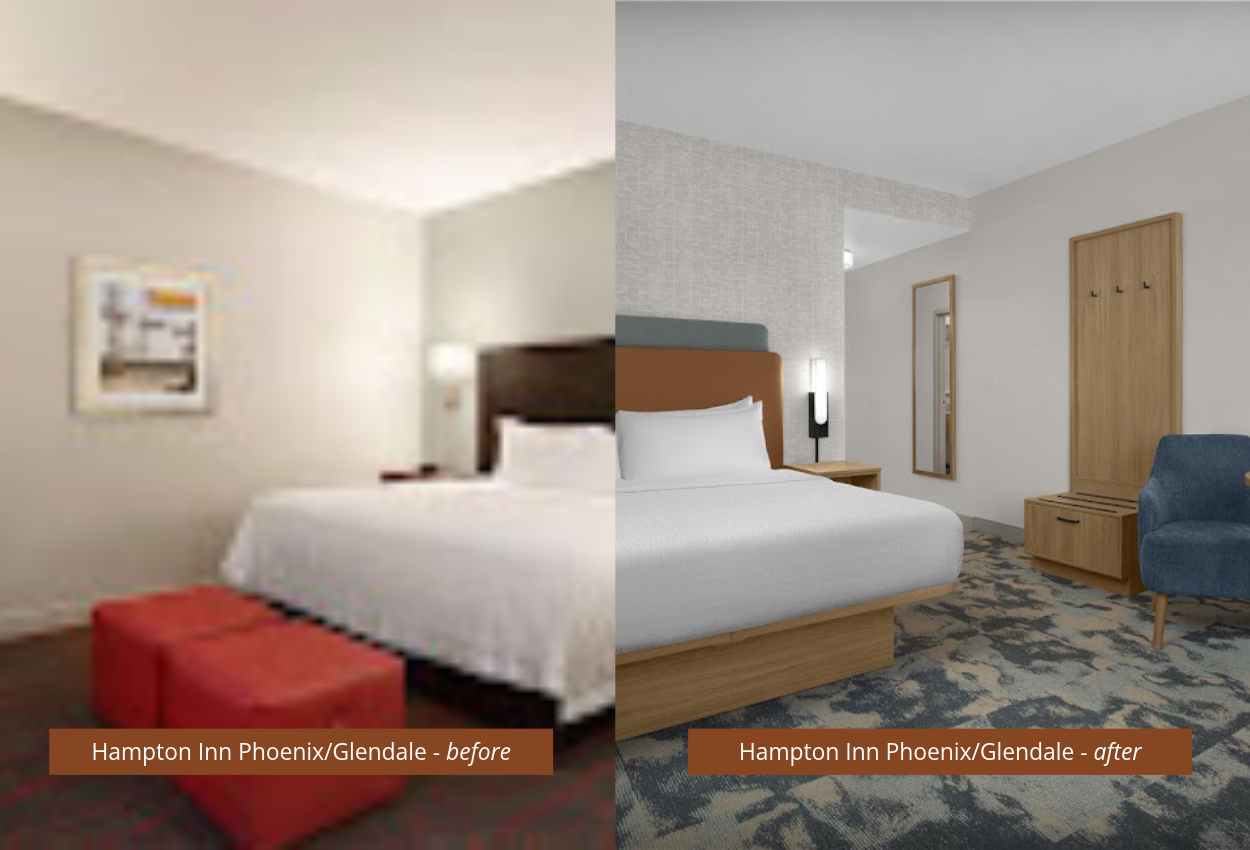
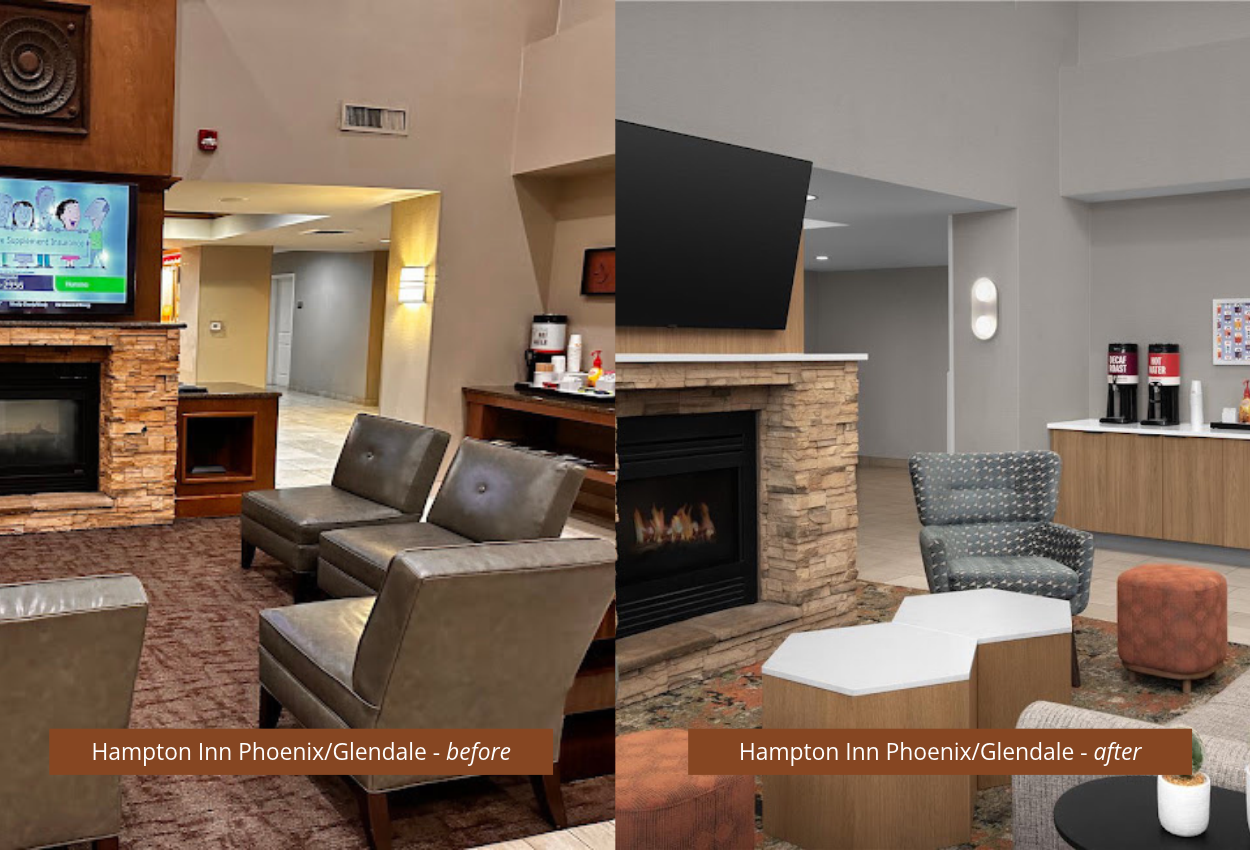
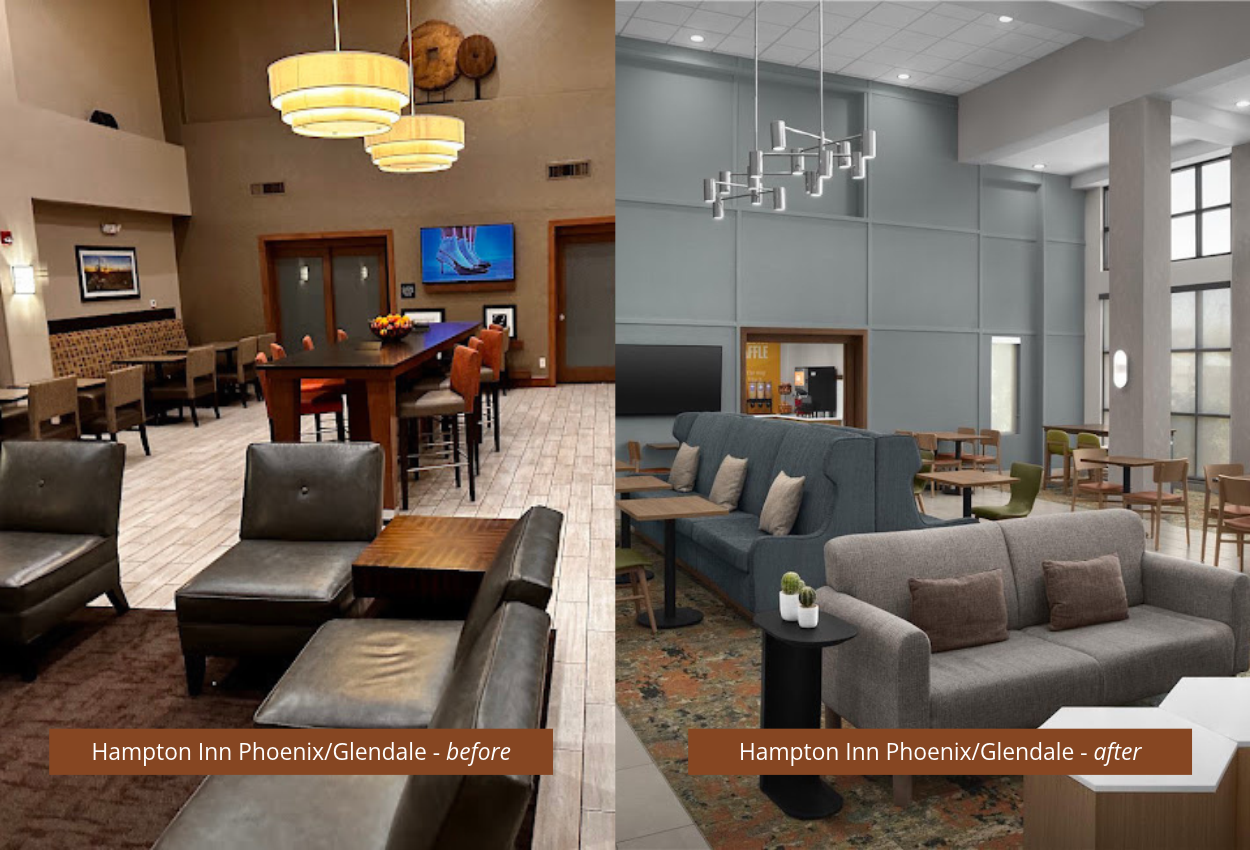
A renovation project that FII handled for Hampton Inn Phoenix Glendale - Westgate in Arizona (completed in 2026)
1. Am I starting early enough?
Probably the most common advice we heard from our team: Start earlier than you think you need to.
There's a lot that needs to happen before the first piece of furniture arrives. Design selections, brand approvals, purchasing, manufacturing, shipping, and coordinating with the construction schedule all take time.
And even if you're following a brand's prototypical design, that doesn't mean everything is ready to order.
Project Manager Kelsey pointed out that preparing FF&E selections and documentation for brand submittals can take six to eight weeks, depending on the project. That's before factoring in manufacturing and shipping.
Waiting too long can get expensive, too. Late orders sometimes mean paying for air freight to keep things on schedule. And if a product isn't properly verified before ordering, you could be looking at a replacement order and another round of waiting.
On a recent renovation project, our team ran into an issue sourcing the original stone selected for suite wet bars. Rather than wait for the material, they worked with the GC to find an alternative with a shorter lead time.
It's a good reminder that even with a solid plan, things change.
Our team's advice is to start planning at least six months ahead when possible, and earlier if the project involves custom furnishings or a lengthy approval process.
2. How am I going to renovate with guests still in the building?
This question sparked quite a bit of conversation with our team, because there's no perfect answer.
Keeping a hotel open during renovations means working around guests, and that can get complicated quickly.
"The timeline gets pushed once owners realize how disruptive reno is for the guests," shared Krista, one of our Project Managers.
Construction crews may have limited working hours. Elevators are being shared with guests. Hallways need to remain accessible. And some areas of the hotel may need to be temporarily relocated or closed.
Krista recalled one project where the original plan was to close half a floor at a time. Once work began, the team realized that approach wasn't going to work.
Deanna, our Construction Manager, brought up another consideration: How much of the hotel are you willing to take out of service at once?
Closing more rooms may allow the renovation to move faster, but it also means giving up more room revenue in the short term. Keeping more rooms available might seem like the better option until you realize how much longer construction could take.
Then there are the smaller details that make a big difference to guests.
Where will breakfast be served if the dining area is closed? What happens to the fitness center? When can crews make noise? And how will guests get around construction areas?
Our team recommends planning around your slower season when possible and thinking through these questions well before work begins.
It's also worth letting guests know about renovations before they arrive. A simple notice on your website can help set expectations and avoid surprises at check-in.
3. Where should I spend more, and where can I save?
Everyone wants to make the most of their renovation budget. But choosing the least expensive option isn't always the best way to do it.
When we asked our team where they'd recommend investing, a few things came up repeatedly: lobby seating, mattresses, window treatments, and other things guests notice and use every day.
Commercial-grade constructed furniture matters, especially in high-traffic areas. A cheaper sofa might save money upfront, but not if it needs to be replaced sooner than expected.
It's worth looking beyond the price tag. The cheapest option is not necessarily the best value. How durable is the product? Does it have a warranty? Can you get replacement parts or matching pieces down the road? Was it built for commercial hospitality use?
That doesn't mean every selection needs to be expensive.
Krista talked about an art installation at a project in Orange Beach that made a big visual impact without a big price tag.
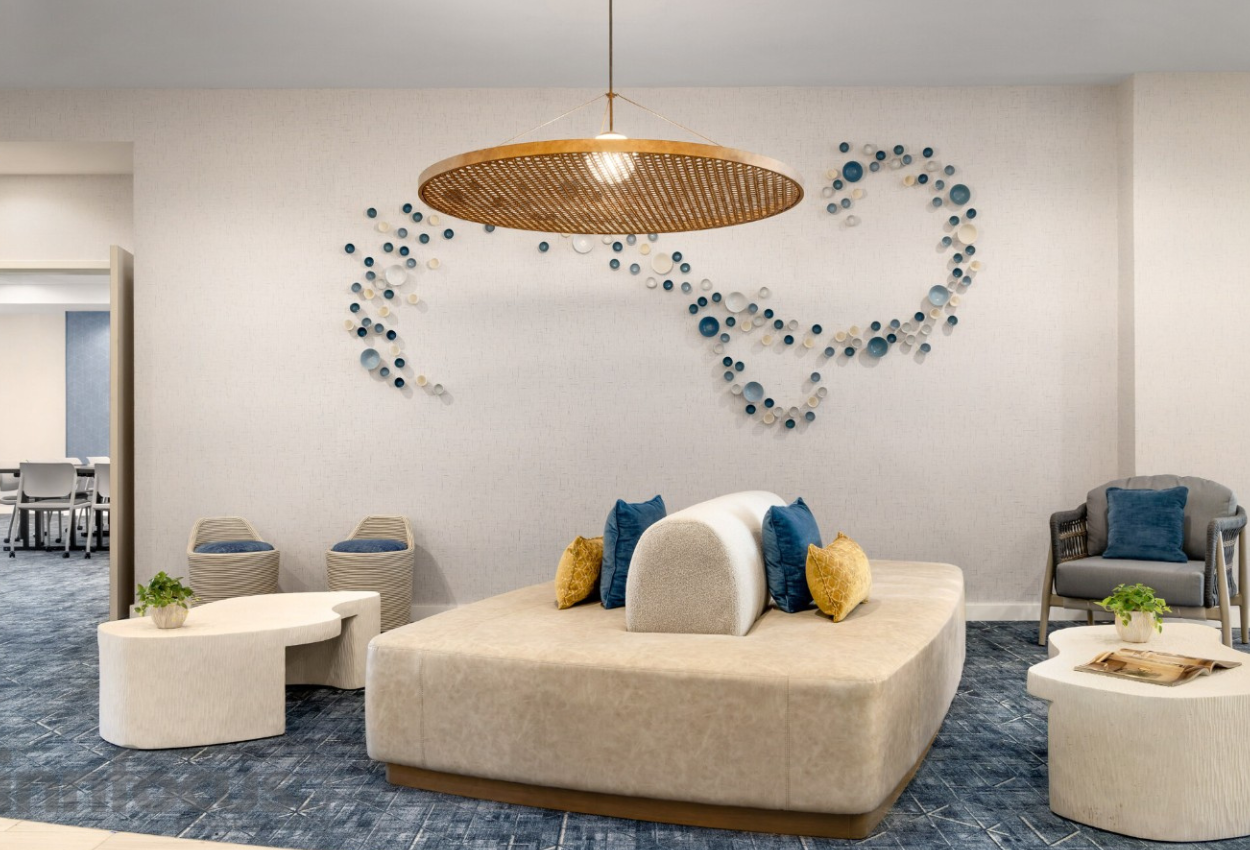
FII Project Manager, Krista, installed this art piece by hand for a big impact (without a big price tag) at SpringHill Suites in Orange Beach, AL.
Sometimes it's a distinctive fabric, an interesting finish, or one well-placed design element that makes a space feel special.
A good designer can help find those opportunities, knowing where to invest and where a less expensive alternative will work just as well.
The goal isn't to spend more everywhere. It's to spend thoughtfully on the things that will make a difference to guests and hold up over time.
4. What happens if my furniture arrives before the hotel is ready?
Here's something that's easy to overlook: Just because your furniture is ready doesn't mean your hotel is ready for it.
Products arrive from different manufacturers, often on different schedules. Meanwhile, construction timelines can shift for all kinds of reasons.
So what happens when the mattresses arrive, but the guestrooms aren't finished?
Fernando, our Logistics Manager, recommends having a warehousing plan rather than relying entirely on products arriving right when they're needed.
Warehousing allows furniture and materials to be received ahead of time and held until the property is ready for installation.
Of course, there's a trade-off. Storage costs money, and moving products more than once can increase the risk of damage.
But the alternative can be costly, too.
If construction falls behind and there's nowhere to put incoming furniture, you may end up scrambling for storage at the last minute. If products arrive late, finished rooms may sit empty because they're not ready to rent.
The way you phase your renovation also matters. Delivering furniture floor by floor can help reduce the amount of storage needed on-site, but it may mean additional freight costs and more deliveries to coordinate.
Deanna also raised a few practical questions worth asking early: Where will storage containers go? Where will contractors keep their tools and materials? And how will deliveries move through the property without disrupting guests?
There's also the matter of who's responsible for receiving products, checking for damage, and making sure the right items end up in the right rooms.
These are conversations to have with your FF&E partner and general contractor before orders start arriving, not when the delivery truck is pulling up.
5. Will these design decisions still make sense five years from now?
It's easy to get caught up in how a hotel will look when the renovation is finished. But it's worth thinking about how the space will actually be used, too.
Technology is a good example.
Our designers are constantly considering where guests will need access to power. Nightstands, desks, and other furniture pieces now need to accommodate charging devices, and guests increasingly expect to stream their own content on hotel TVs.
These might seem like small details, but they're things guests interact with every day.
The type of guest your hotel serves should also play a role in design decisions.
For an extended-stay property, outdoor grills and gathering spaces might be a worthwhile investment. A hotel catering to business travelers may benefit from comfortable work areas. Fitness facilities and pet-friendly amenities might be more important at other properties.
Director of Operations and Senior Project Manager, Lena, brought up how much guest habits are changing, from food delivery to wellness and traveling with pets.
Not every trend is going to make sense for every hotel.
And not every space needs to be completely reinvented. Sometimes the better decision is to improve how an existing area functions or choose finishes that will be easier to maintain in the years ahead.
Before committing to a design direction, think about who's staying at your property, what they actually use, and what will continue to matter to them a few years down the road.
A little planning goes a long way
If there's one piece of advice our team would give hotel owners before starting a renovation, it's this: Hire a general contractor who has experience with hotel renovations. Even better if they’ve work on your hotel brand before.
Renovating an operating hotel is a different ballgame. You're working around guests, tight schedules, deliveries, and unexpected changes. Having people who understand those challenges and know how to work through them can make all the difference.
The right team won't eliminate every surprise, but they'll be much better prepared to handle them.

Contributing FII Team Members: Lena Shepherd (Director of Operations & Senior Project Manager), Kelsey Kelsey Korolchuk, CID (Project Manager & Interior Designer), Krista Burton (Senior Project Coordinator & Interior Designer), Fernando Bicalho (Logistics Manager) and Deanna Petron (Construction Manager).
Furniture Industries works with hotel developers and owners as an Approved Purchasing Agent for IHG Hotels & Resorts and a Preferred Service Provider for Hilton, providing end-to-end FF&E procurement solutions that balance brand compliance with design excellence. Contact us to learn more about how we approach this for every project.