Is Domestic Always Faster? What’s Behind Hotel FF&E Lead Times
When it comes to hotel FF&E procurement, one assumption comes up again and again: domestic suppliers are faster, while overseas suppliers are cheaper.
After more than 50 years of procurement experience, we've learned that the reality isn't nearly that simple. Many delayed hotel openings aren't caused by poor design decisions, they're caused by decisions made late or timelines built on assumptions that don't reflect how products are actually manufactured and delivered.
As one of our project managers, Krista, puts it, "Product isn't just sitting on a shelf." Understanding what truly drives lead times and planning for it early, is one of the biggest factors in keeping a hotel project on schedule.
It's Not Domestic vs. Overseas. It's Time vs. Budget.
Every FF&E sourcing decision balances two competing priorities: time and budget.
Domestic and overseas sourcing are simply different ways of balancing those priorities. A domestic manufacturer may rely on imported materials or components, creating overseas lead times despite carrying a domestic label. On the other hand, an overseas supplier with available production capacity and an order placed early can outperform a domestic supplier that receives a late purchase order.
What determines the outcome isn't geography alone. It's production schedules, supplier capacity, procurement planning, and timing. That's why experienced procurement teams spend as much time evaluating vendors and project schedules as they do evaluating products.
How Lead Times Are Built Into Your Project
Lead times are built into your project from the beginning, and defined at the proposal stage.
Projects typically begin with an estimating phase, where preliminary budgets are developed. At this stage, vendor selections and specifications are still evolving, making detailed lead-time discussions premature.
Once the project moves into project management, the schedule becomes much more defined. Our project managers work with the client to finalize specifications, select vendors, coordinate responsibilities, and establish a realistic procurement schedule that aligns with both the construction timeline and the project's budget.
Only after those decisions are finalized, and client approval is received, are purchase orders released and production officially begins.
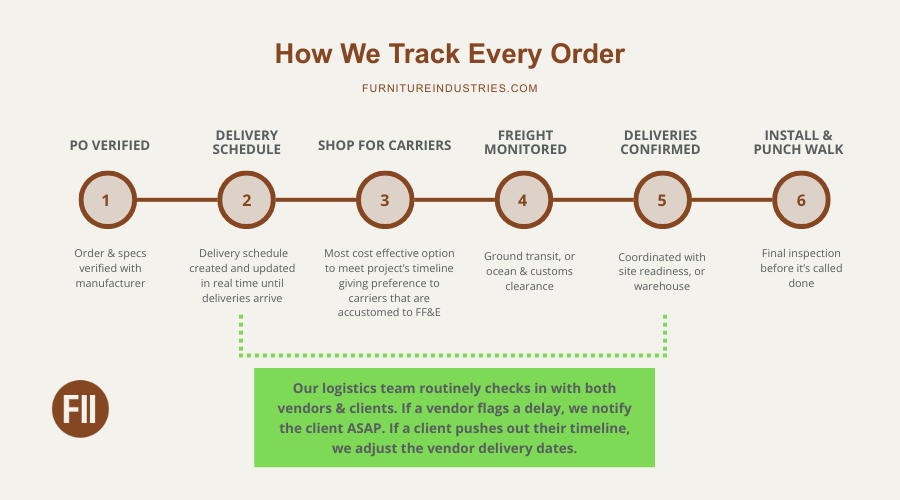
The FII logistics team routinely checks on delivery status of every order, to confirm timing has not slipped.
Choosing the Right Vendors
Vendor selection has a direct impact on your project timeline.
For prototypical projects, hotel brands often provide an approved vendor list. In these cases, our role is to confirm that the specified vendors can realistically meet the project's schedule and identify any concerns before they become delays.
For custom projects, vendor selection is more flexible. We evaluate manufacturers based on production capacity, quality, pricing, reliability, and realistic lead times, not simply catalog offerings.
Occasionally, an alternate vendor may be required when a brand hasn't specified a supplier or the preferred vendor isn't the right fit. Before introducing any new vendors, we conduct a thorough vetting process that includes interviews, product samples, project references, and operational reviews. That diligence helps minimize surprises later in the project and ensures new vendors meet the same standards as our established partners.
When the Production Clock Actually Starts
One of the biggest misconceptions about lead times is when they actually begin.
Manufacturers don't typically reserve production capacity until purchase orders are issued, and purchase orders can't be released until required client deposits have been received. In our process, that means receiving 45% of the project cost before ordering can begin.
A two-week delay in approvals or deposits often becomes a two-week delay in manufacturing, which can ripple through shipping, installation, and ultimately the hotel's opening schedule.
Keeping Projects on Track
Our logistics team follows a structured communication schedule with every vendor, checking production status at key milestones throughout manufacturing and delivery. Those regular touchpoints help verify timelines, identify potential issues early, and keep clients informed throughout the project.
When delays do occur, as they occasionally will, we work with vendors to implement contingency plans whenever possible. Whether that means adjusting delivery schedules, coordinating alternative installation plans, or arranging temporary furnishings, our goal is to keep the overall project moving toward opening day.
Just-in-Time Delivery vs. Warehousing
Approximately 90% of our projects operate using a just-in-time delivery model, with products arriving only when they're ready to be installed. This minimizes onsite storage, reduces the risk of damage, and keeps construction moving efficiently.
Renovation projects often require a different approach. Because hotels frequently remain operational during renovations, installation schedules can change from week to week. In these situations, warehousing FF&E ahead of installation provides greater flexibility, allowing products to be staged and delivered as individual phases are completed.

Estimates based on lead times from real projects managed by FII in 2025-2026
So, Is Domestic Always Faster?
The short answer is: not always, but generally, yes.
Domestic manufacturing often provides shorter lead times because products travel fewer miles and production is typically easier to coordinate. However, there are important exceptions. Domestic manufacturers may depend on imported materials or components, while overseas suppliers with available production capacity and well-planned schedules can sometimes deliver faster than domestic suppliers brought into the project too late.
Cost tells a similar story. Overseas isn't always cheaper, either. Once you factor in ocean freight and tariffs, totals can come out on par with domestic products.
Ultimately, the biggest drivers of FF&E lead times aren't geography alone. They're early planning, thoughtful vendor selection, timely client approvals, and proactive project management.
After fifty years of helping hotel owners and developers navigate FF&E procurement, we've learned that successful projects aren't built on assumptions. They're built on realistic schedules, experienced partners, and decisions made early enough to keep every milestone on track.
Frequently Asked Questions About Hotel FF&E Lead Times
Is domestic hotel FF&E always faster than overseas sourcing?
Not always, but generally yes. Domestic manufacturers often have shorter transportation times and may offer greater flexibility during production. However, many domestic manufacturers source components internationally, which can extend lead times. Likewise, an overseas supplier with available production capacity and an order placed early may deliver faster than a domestic supplier receiving a late purchase order. The biggest factors influencing lead time are planning, production capacity, supplier reliability, and procurement management, not simply where a product is manufactured.
What factors have the biggest impact on hotel FF&E lead times?
Several factors influence FF&E lead times, including product customization, manufacturer production schedules, raw material availability, shipping logistics, project approvals, and payment timing. Vendor selection also plays an important role. An experienced procurement team evaluates these variables early in the project to build realistic schedules and reduce the likelihood of delays.
When do FF&E lead times actually begin?
Lead times typically begin when the manufacturer receives a purchase order and is able to schedule production, not when a project is estimated or products are initially discussed. Before purchase orders can be released, product selections, specifications, client approvals, and required deposits must all be completed. Delays during any of these early steps can directly affect manufacturing and delivery schedules.
Why do hotel FF&E projects get delayed?
Manufacturing delays can occur, but many project delays begin much earlier. Late design decisions, delayed client approvals, incomplete specifications, postponed deposits, and unrealistic scheduling assumptions often push production back before manufacturing even starts. Proactive planning and regular communication throughout a project helps minimize these risks.
Does choosing domestic manufacturers eliminate supply chain risk?
No. While domestic manufacturing can reduce transportation time, it doesn't eliminate supply chain challenges. Many domestic manufacturers rely on imported materials or components that are subject to the same global shipping disruptions as overseas suppliers. Evaluating each manufacturer's complete supply chain provides a more accurate picture of expected lead times.
How are FF&E vendors selected for hotel projects?
Vendor selection depends on the type of project. Brand-standard (prototypical) hotels often require purchasing from an approved vendor list, while custom projects allow greater flexibility. Our project managers evaluate vendors based on production capacity, quality, reliability, pricing, and their ability to meet the project's timeline. When alternate vendors are considered, they are thoroughly vetted before being incorporated into the project.
What is just-in-time FF&E delivery?
Just-in-time delivery is a logistics strategy that schedules FF&E to arrive at the project site only when installation is ready to begin. This minimizes onsite storage, reduces the risk of damage, and improves coordination with construction schedules. Renovation projects typically benefit from temporary warehousing, allowing products to be staged and delivered as individual phases are completed.
How often should FF&E orders be tracked during procurement?
Successful hotel procurement relies on consistent communication throughout manufacturing and shipping. Rather than checking in only when problems arise, we believe in checking-in on production at regular milestones, verifying manufacturing progress, confirming shipping schedules, and communicating updates to project stakeholders. Frequent tracking allows issues to be identified early and contingency plans to be implemented before they affect opening dates.
Why is procurement experience important for hotel FF&E projects?
Experienced procurement professionals understand how vendor capacity, production schedules, logistics, and construction timelines interact. They can identify potential risks before orders are placed, recommend vendors that align with project goals, coordinate communication throughout production, and respond quickly if delays occur. Effective procurement is about much more than purchasing products. The value of what we do is in managing the entire process to help projects stay on schedule and within budget.
How can hotel owners reduce FF&E lead time risks?
The best way to reduce lead time risk is to make key decisions early. Finalizing specifications, selecting vendors promptly, approving proposals without unnecessary delays, submitting required deposits on time, and working with an experienced procurement partner all contribute to a more predictable project schedule. While no procurement process can eliminate every delay, early planning and proactive management significantly improve the likelihood of an on-time hotel opening.
Furniture Industries works with hotel developers and owners, and is an Approved Purchasing Agent for IHG Hotels & Resorts and Hilton. We provide interior design, end-to-end FF&E procurement, vendor management, logistics and installation. Contact us to learn more about how we would approach your project.