How Smart Hotel Developers Balance Brand Compliance with Custom Aesthetics
Fifty years of FF&E procurement has taught us a lot about what separates good hotel projects from great ones. More often than not, it comes down to a question that doesn't get asked early enough: Does this property have permission to be itself?
Brand standards define the floor. They protect the guest, protect the asset, and power the distribution engine that keeps rooms filled. But they rarely define the ceiling. The developers who build the most compelling, highest-performing properties are the ones who understand that distinction, and who use the procurement process to close the gap between the two.
Let’s dig in.
Occupancy Fills Rooms. Design Fills the Rate Gap.
The performance case for branded hotels is well established: higher occupancy, deeper distribution, loyalty program access. Real advantages. But the picture gets more interesting when you look at the rate.
An original study analyzing more than 51,000 U.S. hotels across a full economic cycle found that independent hotels actually outperformed branded counterparts on both ADR and RevPAR, even while running lower occupancy. The brand's edge was in filling rooms. The independent's edge was in pricing them. Neither model wins outright.
What's even more telling is what's happening at the edges of the branded universe. The Highland Group's Boutique Hotel Report tracks the fastest-growing slice of the industry: soft brand collections, lifestyle hotels, and independent boutiques. In 2024, luxury lifestyle hotels posted a $380 ADR and $262 RevPAR, both above U.S. luxury averages. Upper-upscale soft brands outperformed national benchmarks across the board. These aren't flukes. They reflect a real structural shift in what guests are willing to pay a premium for, and that has direct implications for how developers should be thinking about design and procurement.
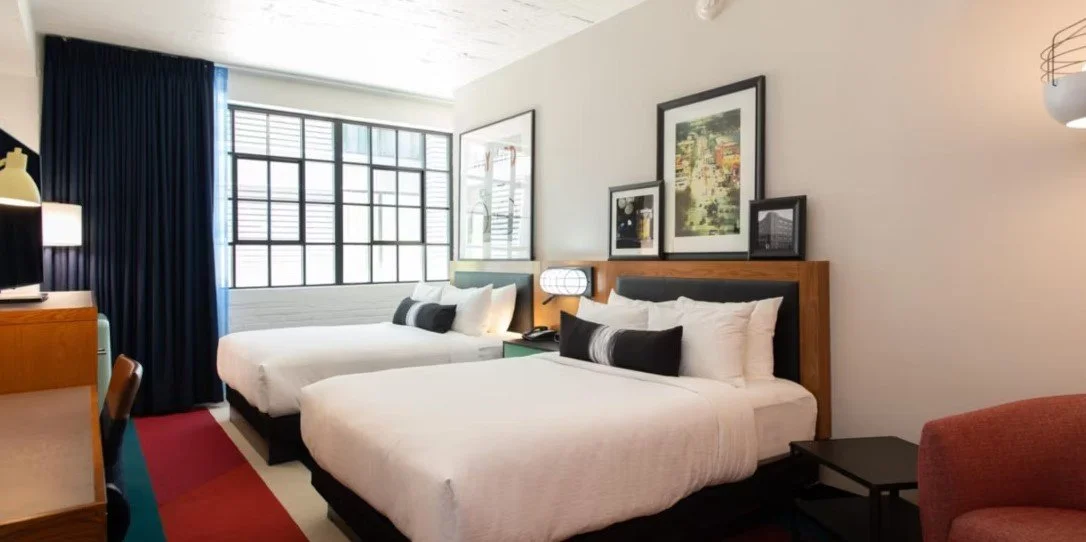
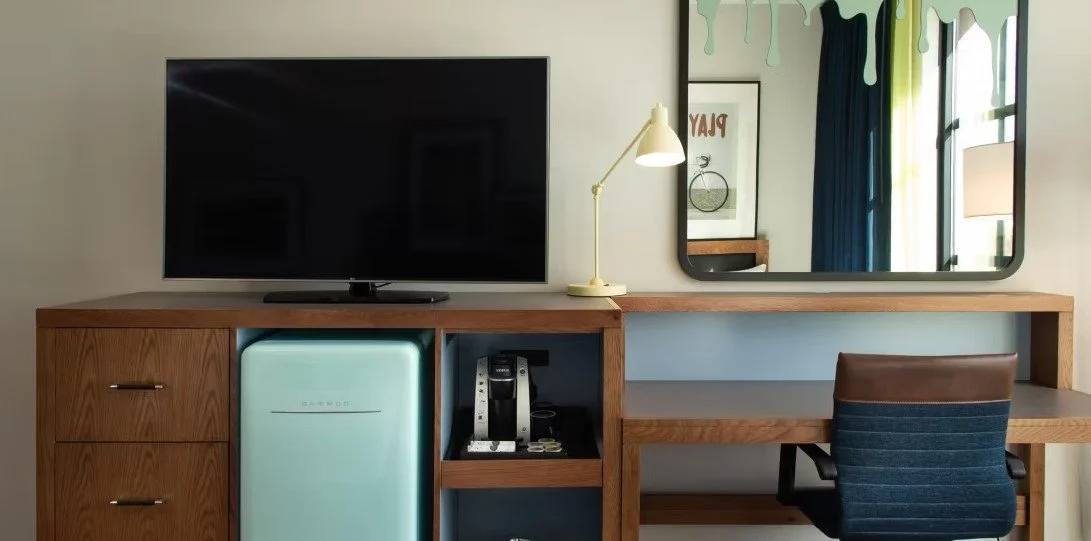
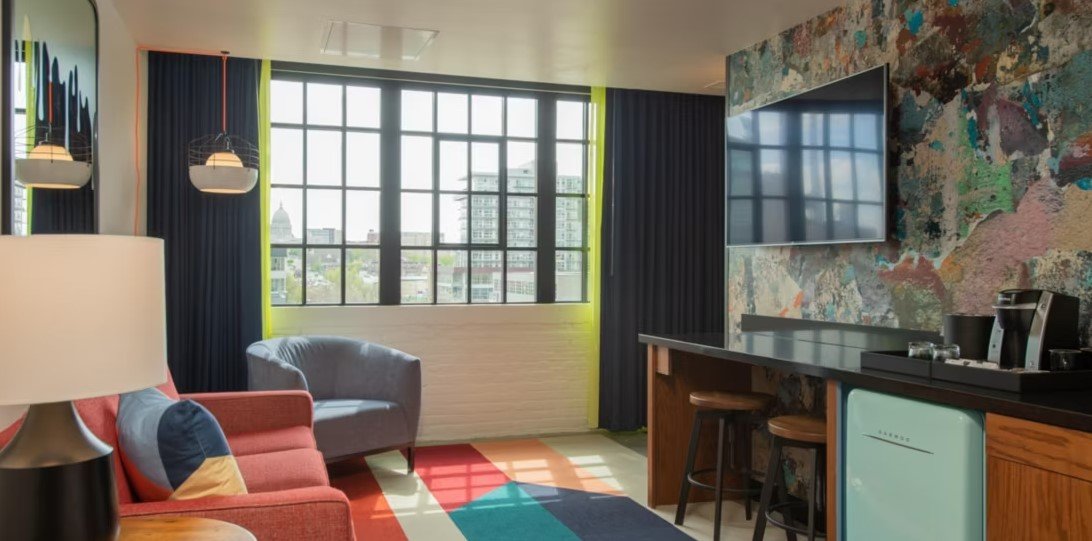
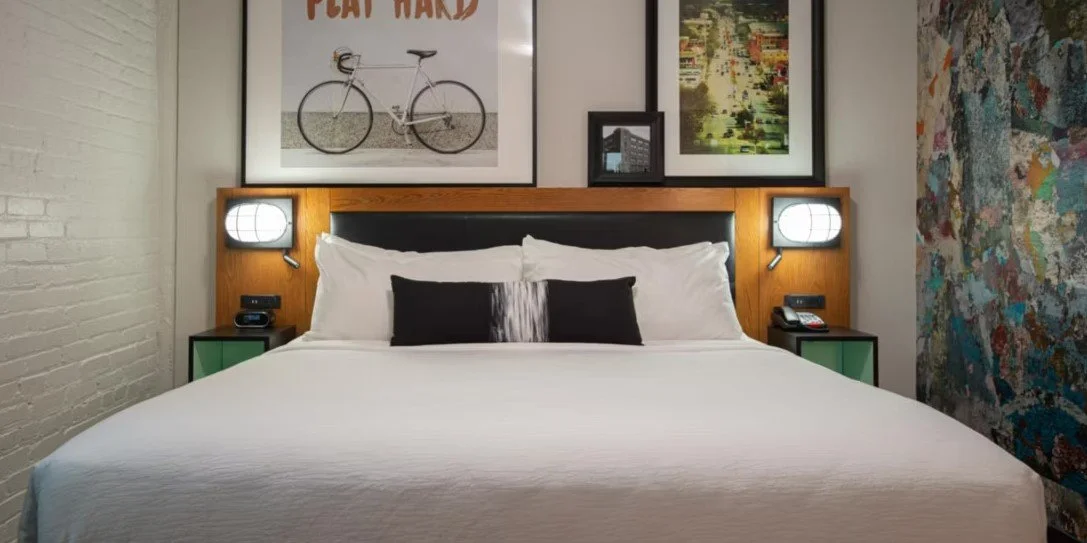
Hotel Indigo in Madison is a beautiful juxtaposition at its finest: bright yet moody, eclectic yet refined, traditional yet modern. Furniture Industries worked on the procurement for Hotel Indigo, located in Madison, Wisconsin.
The Standards Exist for a Reason. Here's Why That's Actually Good News.
Before making any case for creative flexibility, it's worth being straight about why brand standards exist in the first place. It's actually where we start every client conversation, too.
Brand standards protect the guest. A traveler booking a Holiday Inn Express in an unfamiliar city is buying a promise: this room will be clean, functional, and consistent with the last one. That promise has real economic value. It powers millions of loyalty bookings every year. Diluting it isn't just a franchisor problem, it's an owner problem.
Brand standards also protect the asset. Properties that fall out of compliance face PIPs, deteriorating quality scores, and a harder exit down the road. Staying in compliance isn't just about keeping the flag flying; it's about protecting long-term asset value.
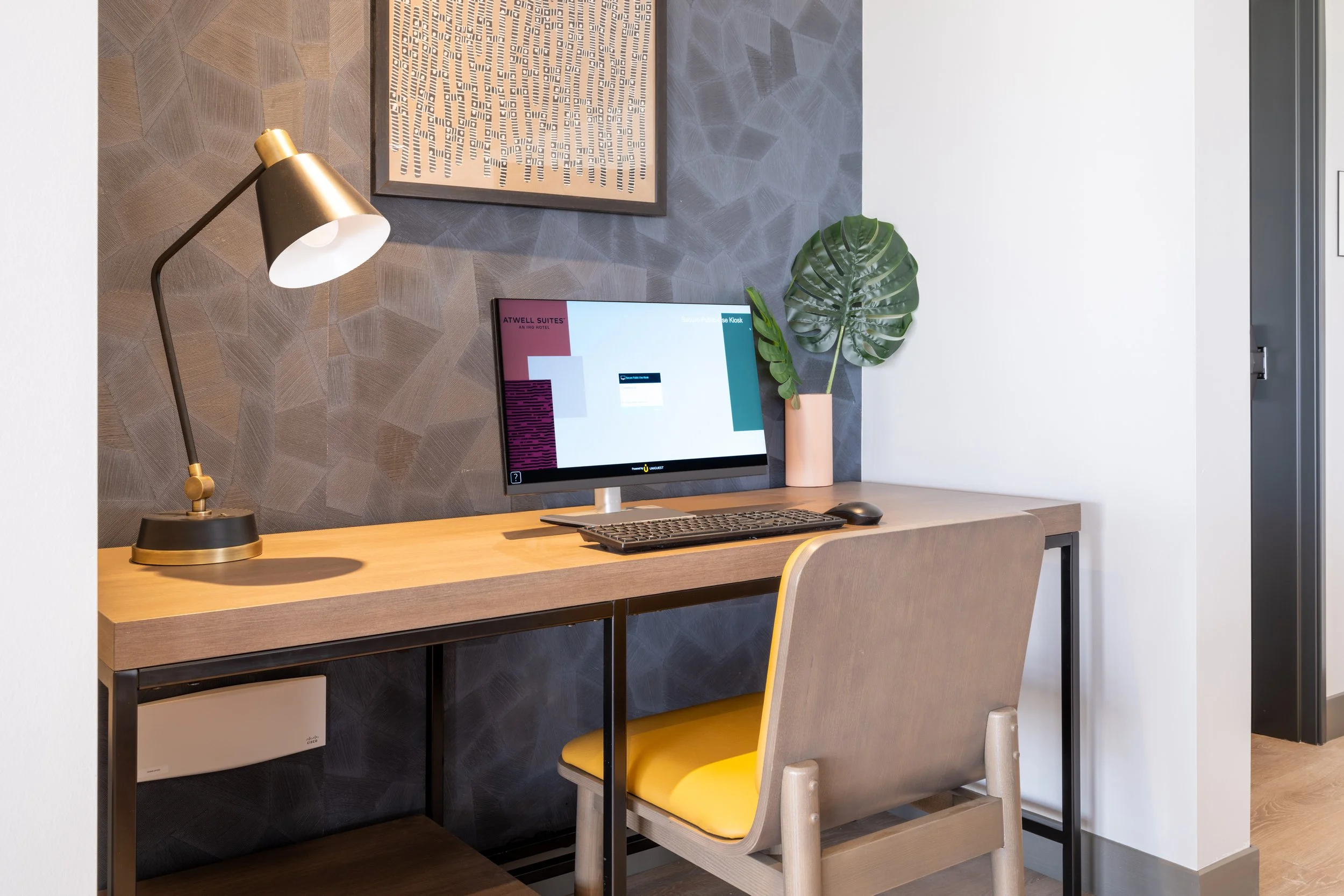
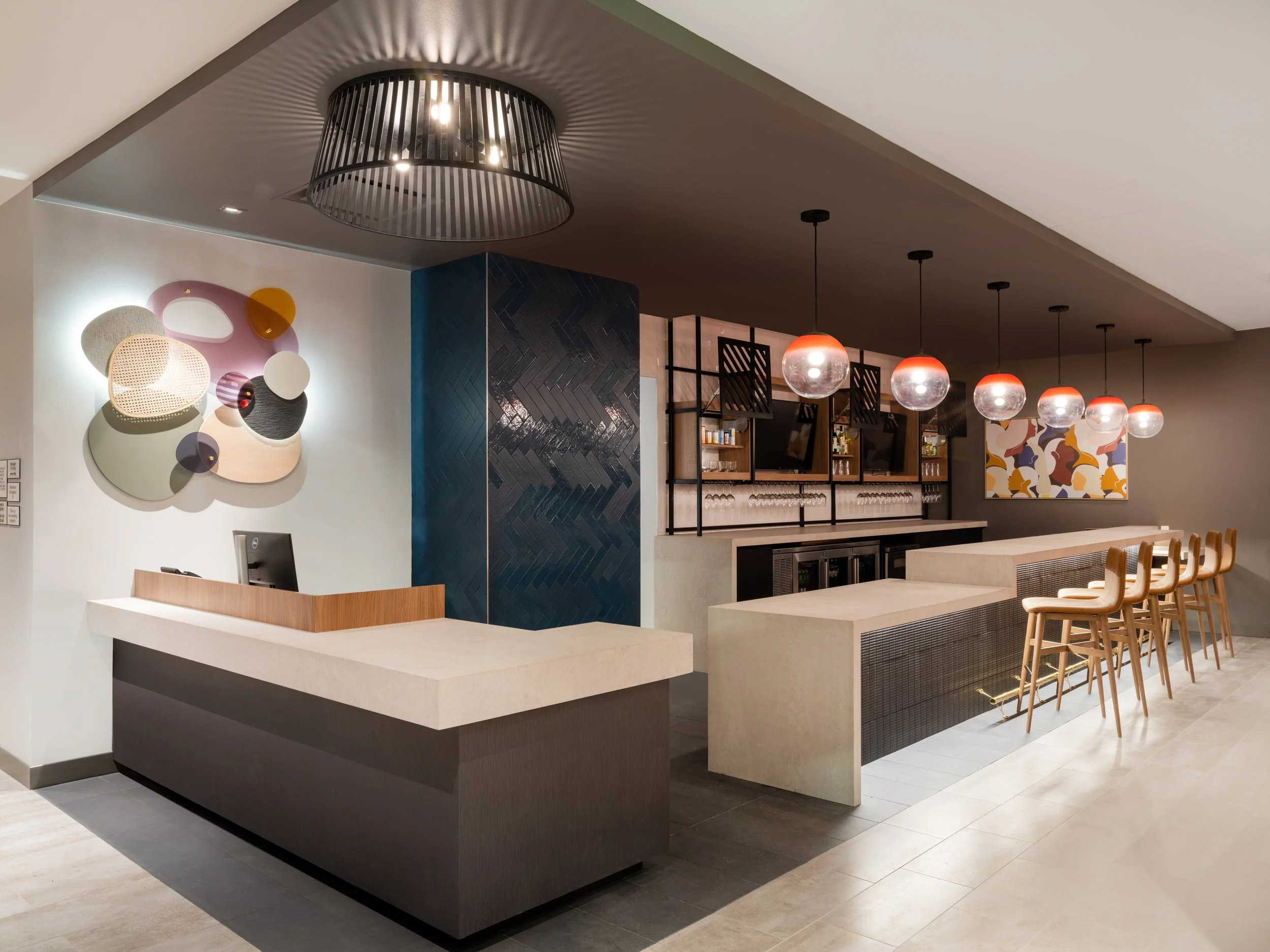
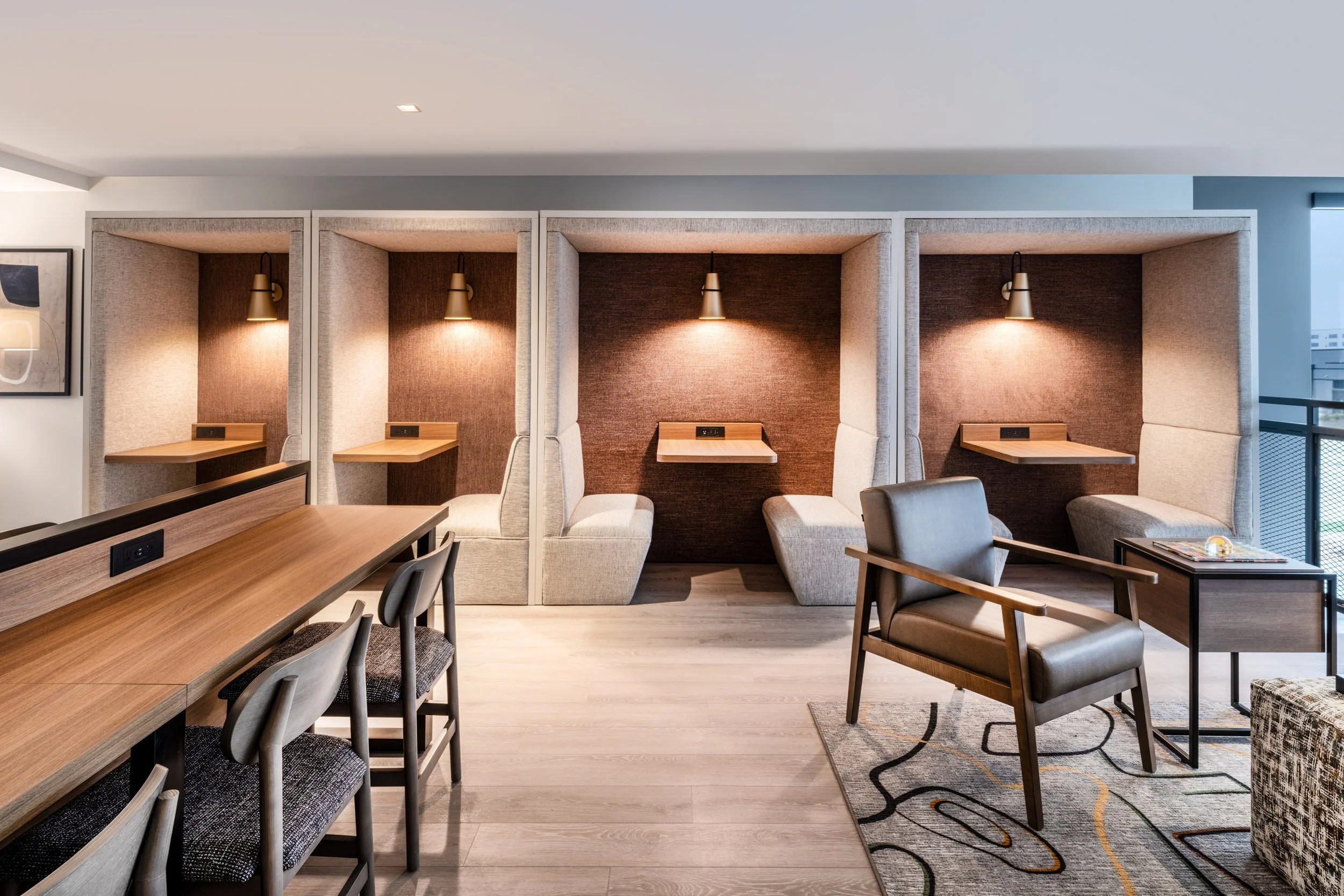
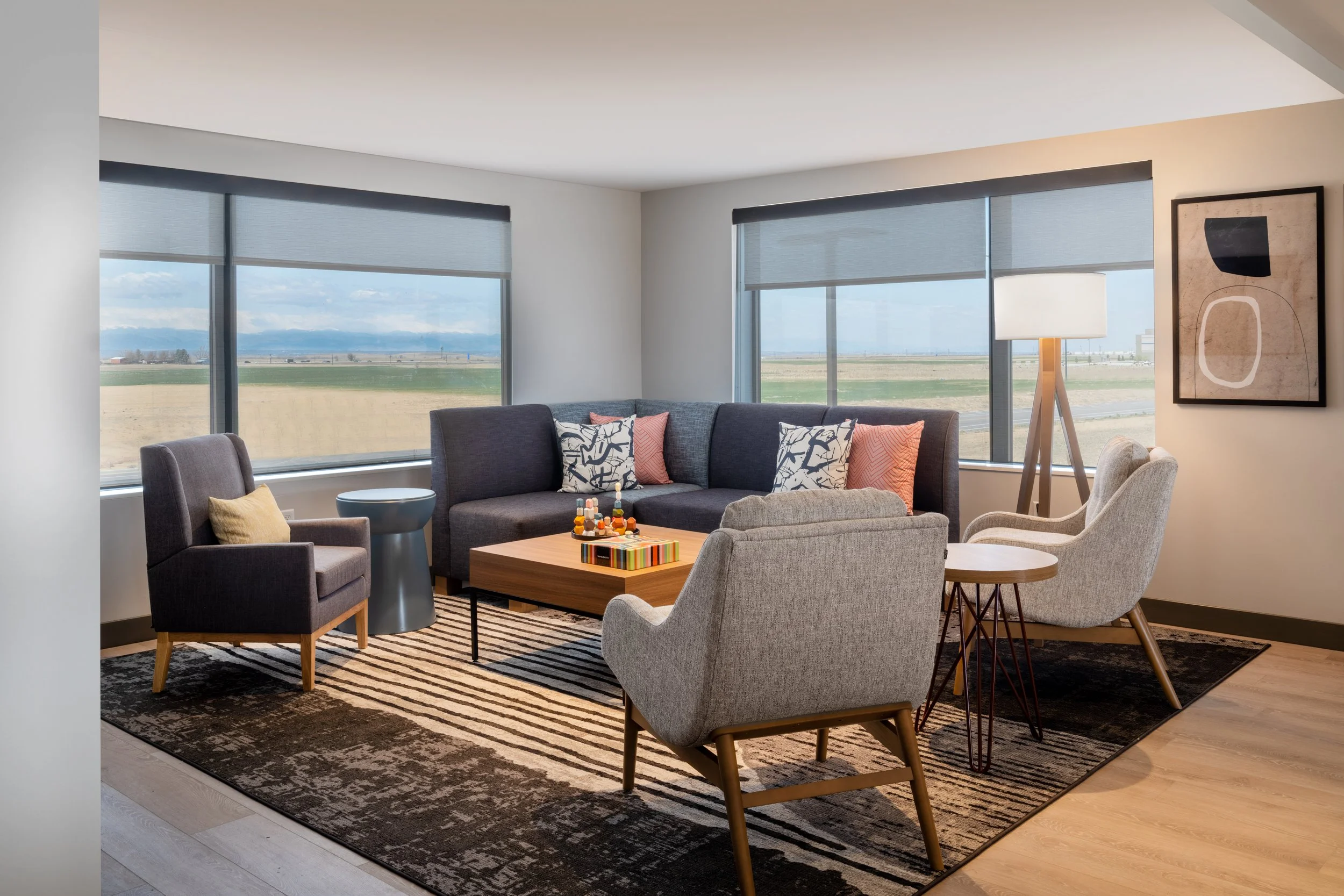
The best brand systems understand this balance. IHG, for example, introduced expanded prototype variations for Staybridge, Candlewood, and Atwell Suites in 2024 specifically to give developers more flexibility across different site configurations and market types, without compromising the guest experience. We worked on the first-ever Atwell Suites prototype at Denver International Airport, and got to see firsthand how that kind of flexibility, used well, creates something genuinely better than either rigid compliance or unchecked creative freedom could on its own.
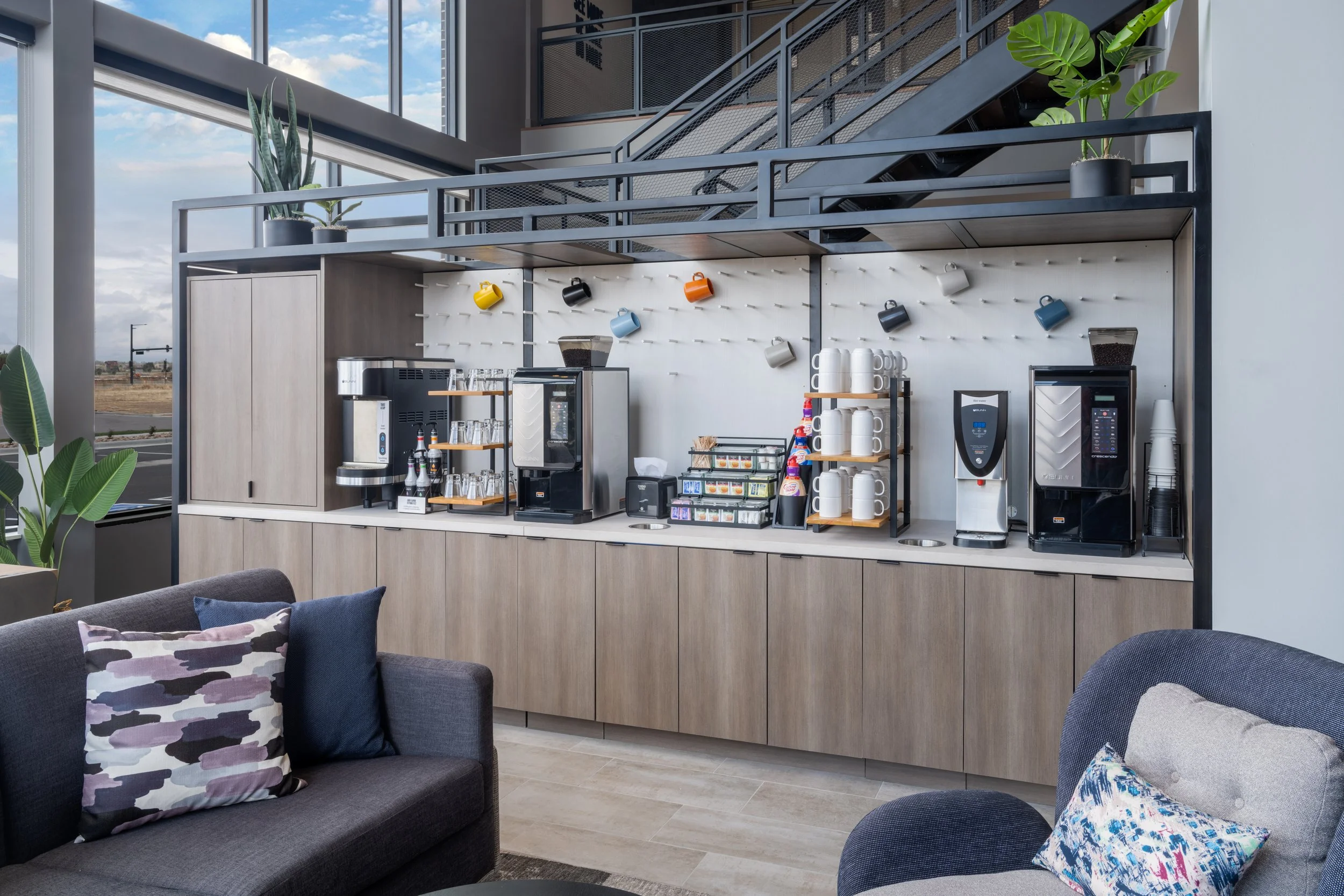
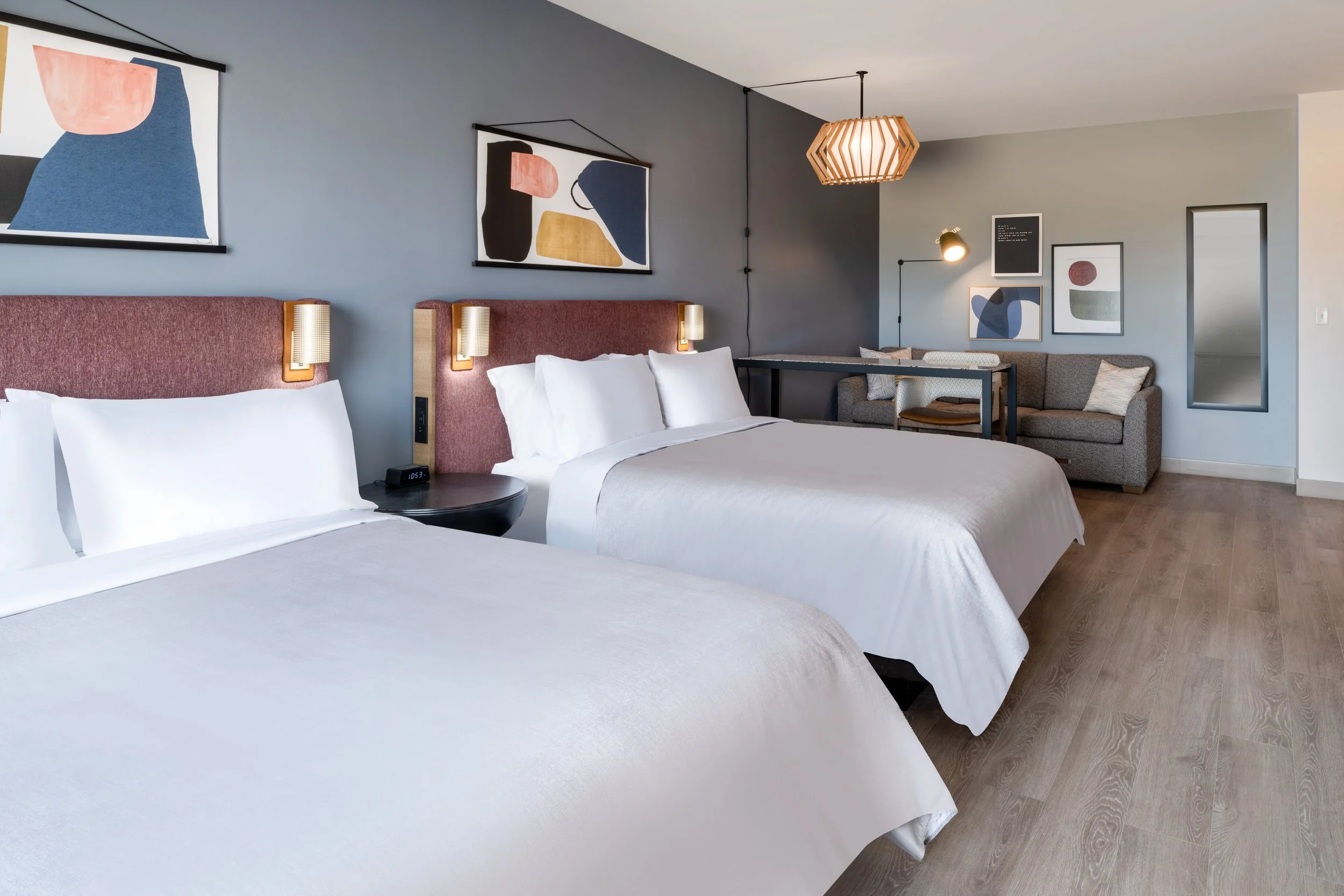
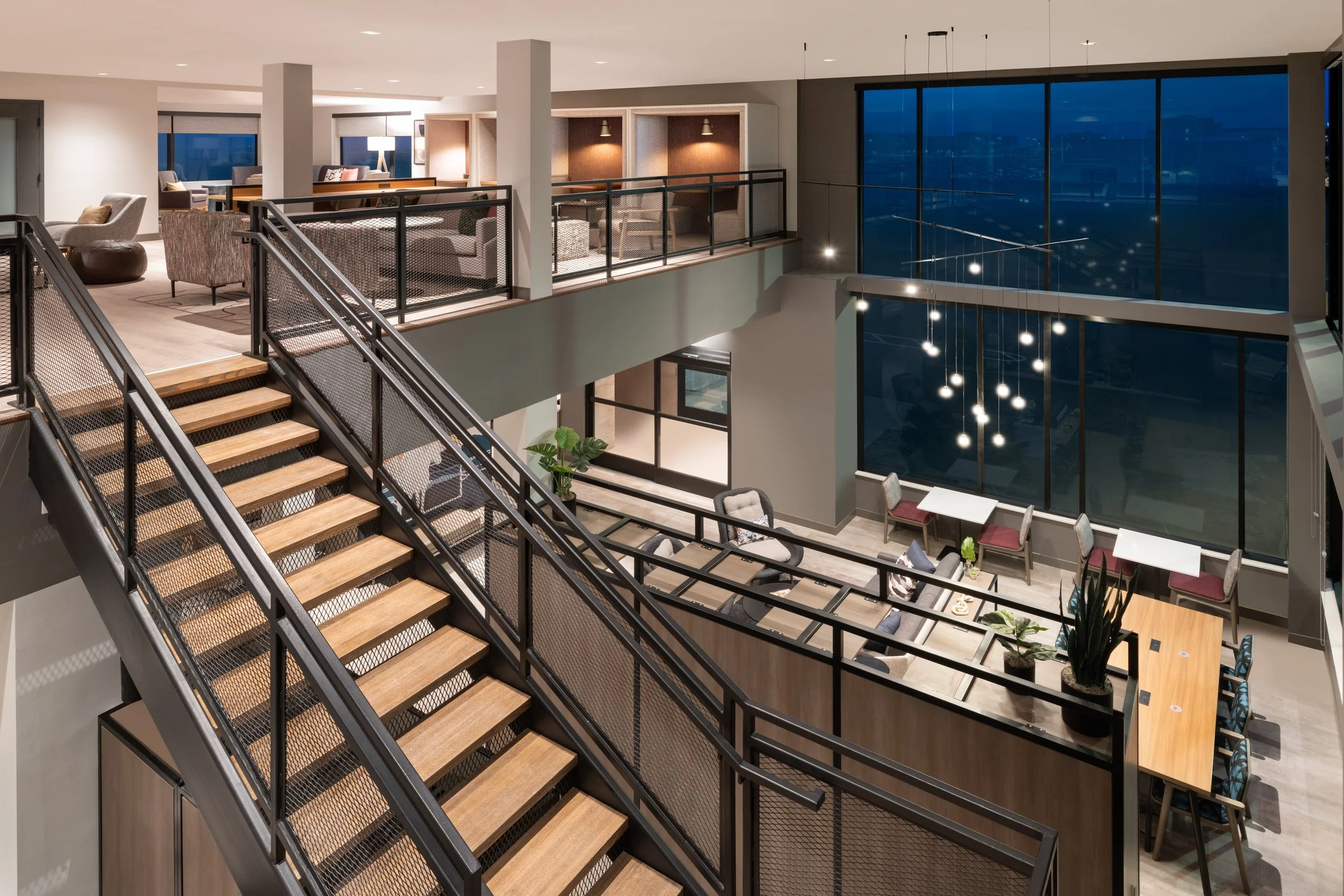
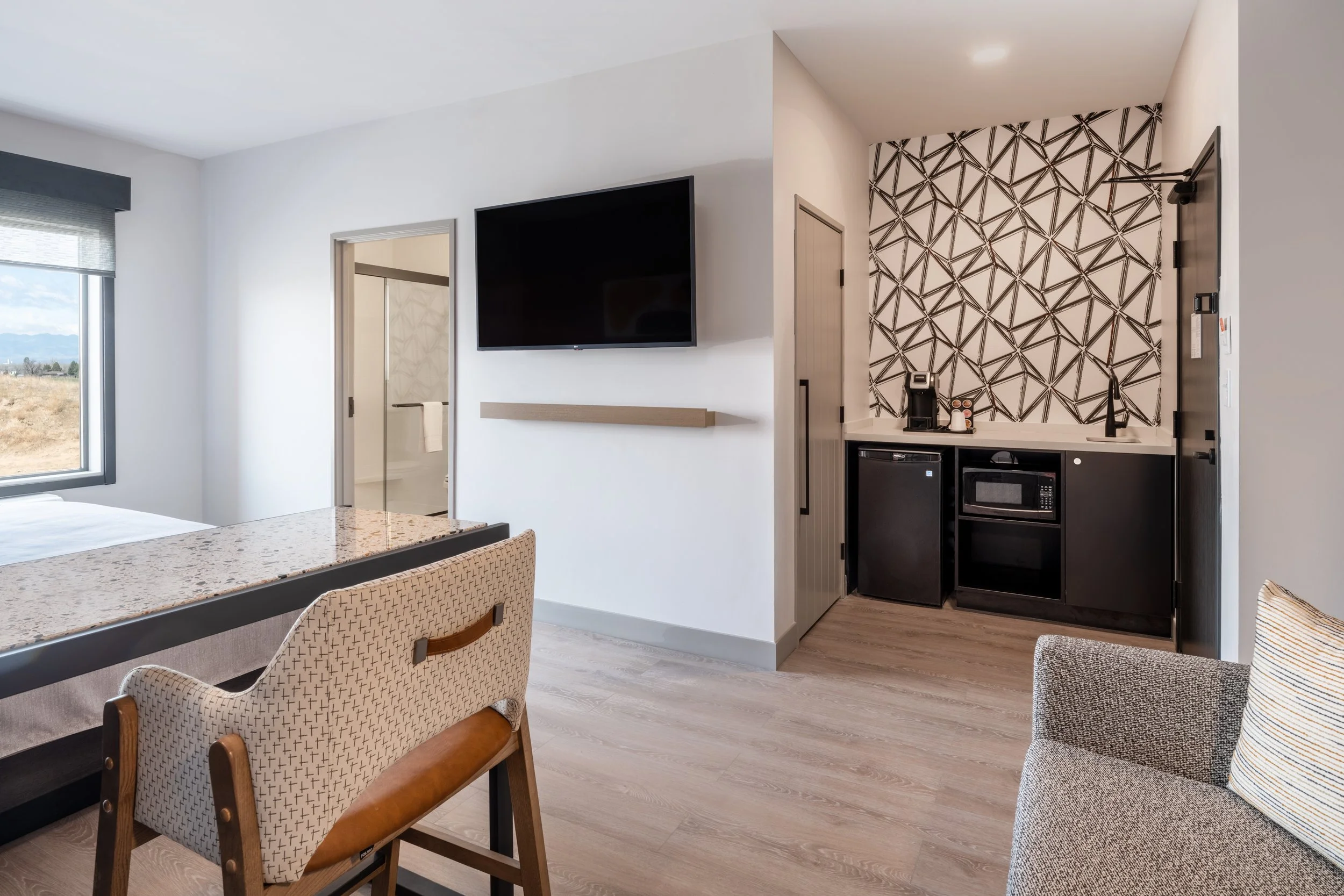
This Atwell Suites, located at the Denver International Airport, was Atwell’s first prototype. It occupies 96 well-appointed rooms, a welcoming lobby, a business center, a fitness center, and a well loved outdoor environment. We were honored to have been apart of this project where we procured all FF&E for the entirety of the property.
It's Not a Light Switch. It's a Dial.
The mistake most developers make is treating compliance like a light switch, you're either in spec or you're not. In practice, brand standards operate across a spectrum. The most successful owner-operators know where the latitude lives.
Some things are non-negotiable: structural prototypes for new-build products, bedding specifications, loyalty program integration, safety systems. These exist because they protect the brand promise at its most fundamental level, and deviation carries real risk.
But a lot of other things leave significant room for interpretation: finish selections within approved categories, FF&E that meets spec while expressing local character, art programs, lighting atmosphere, landscaping, F&B concept. That's where real design intelligence lives. After 50 years of working directly within the brand standard frameworks of IHG, Hilton, Marriott, Wyndham, and others, we know exactly where that room exists and how to use it.
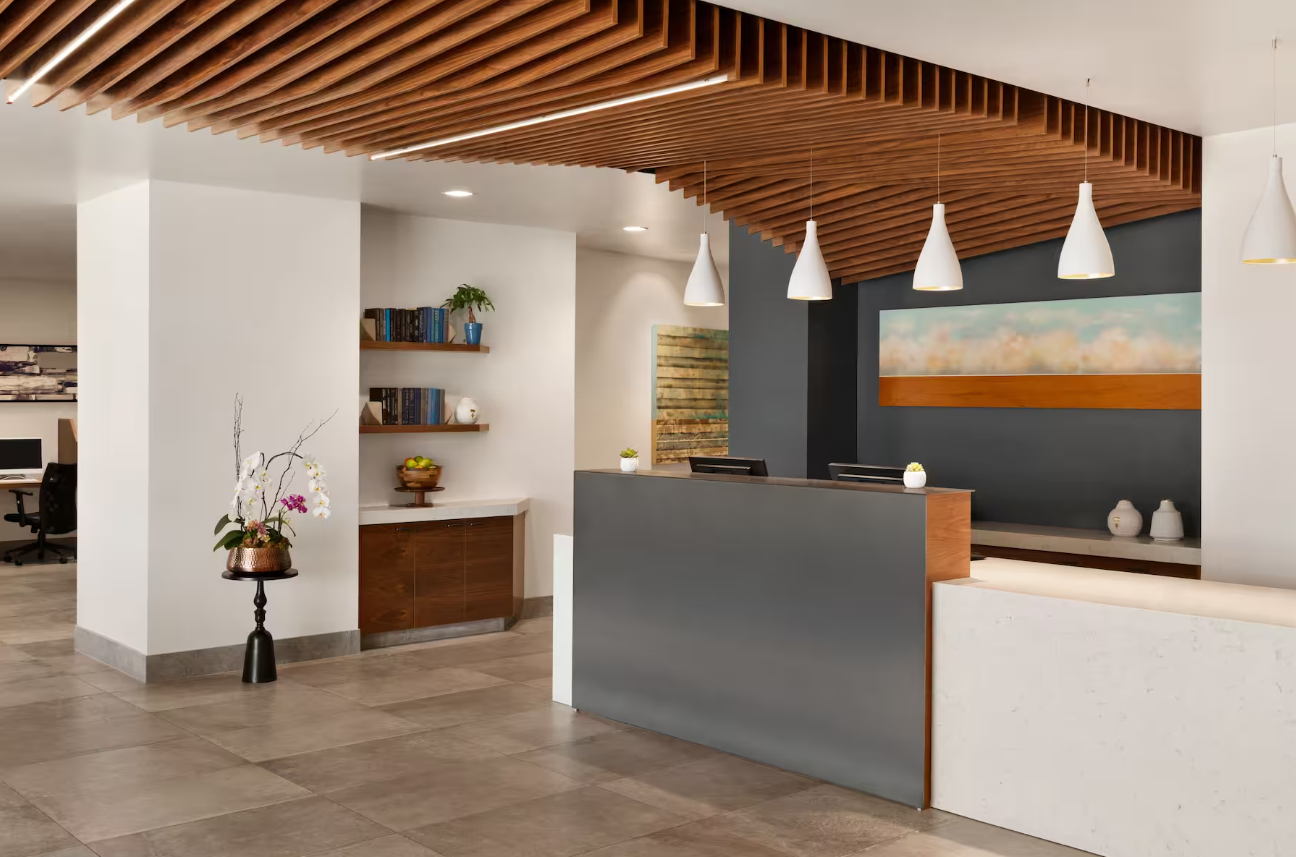
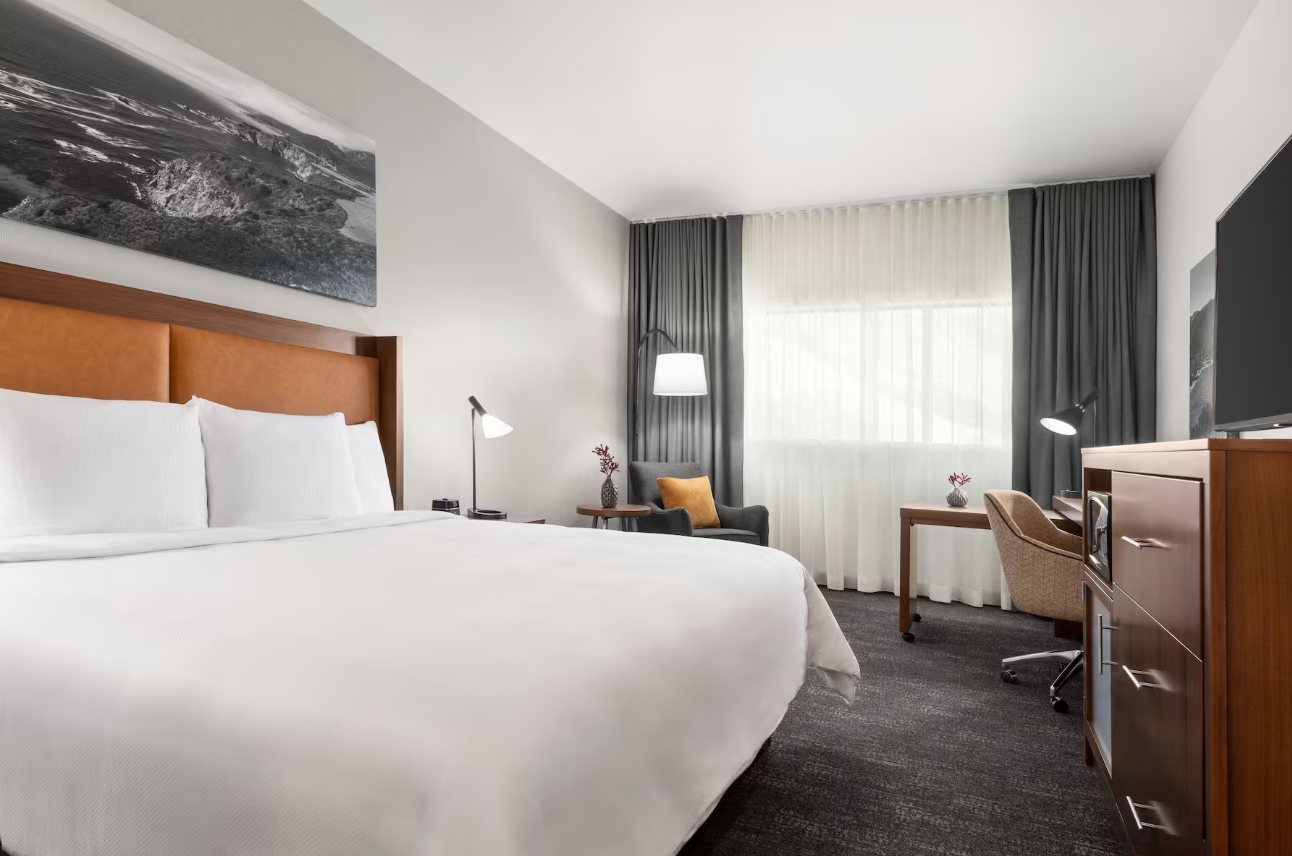
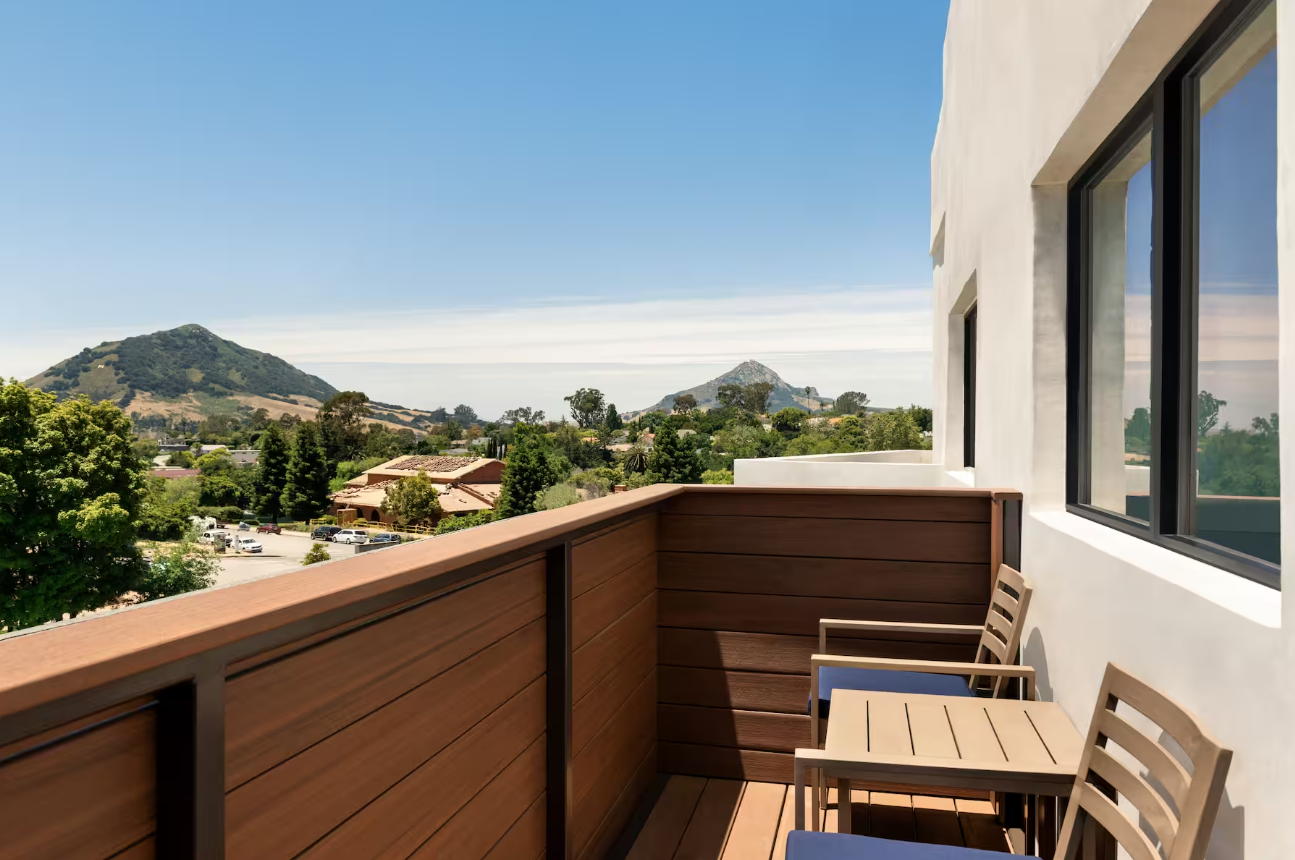
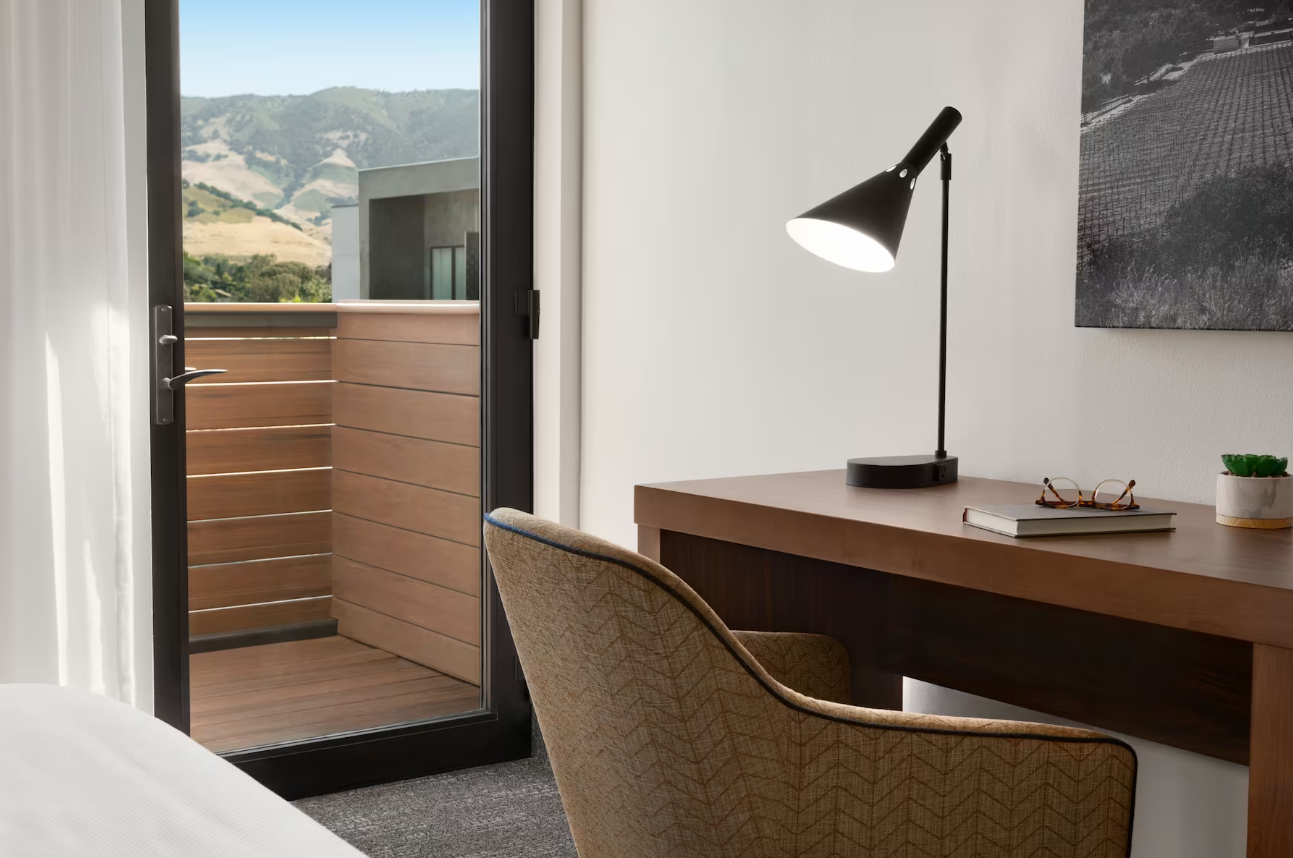
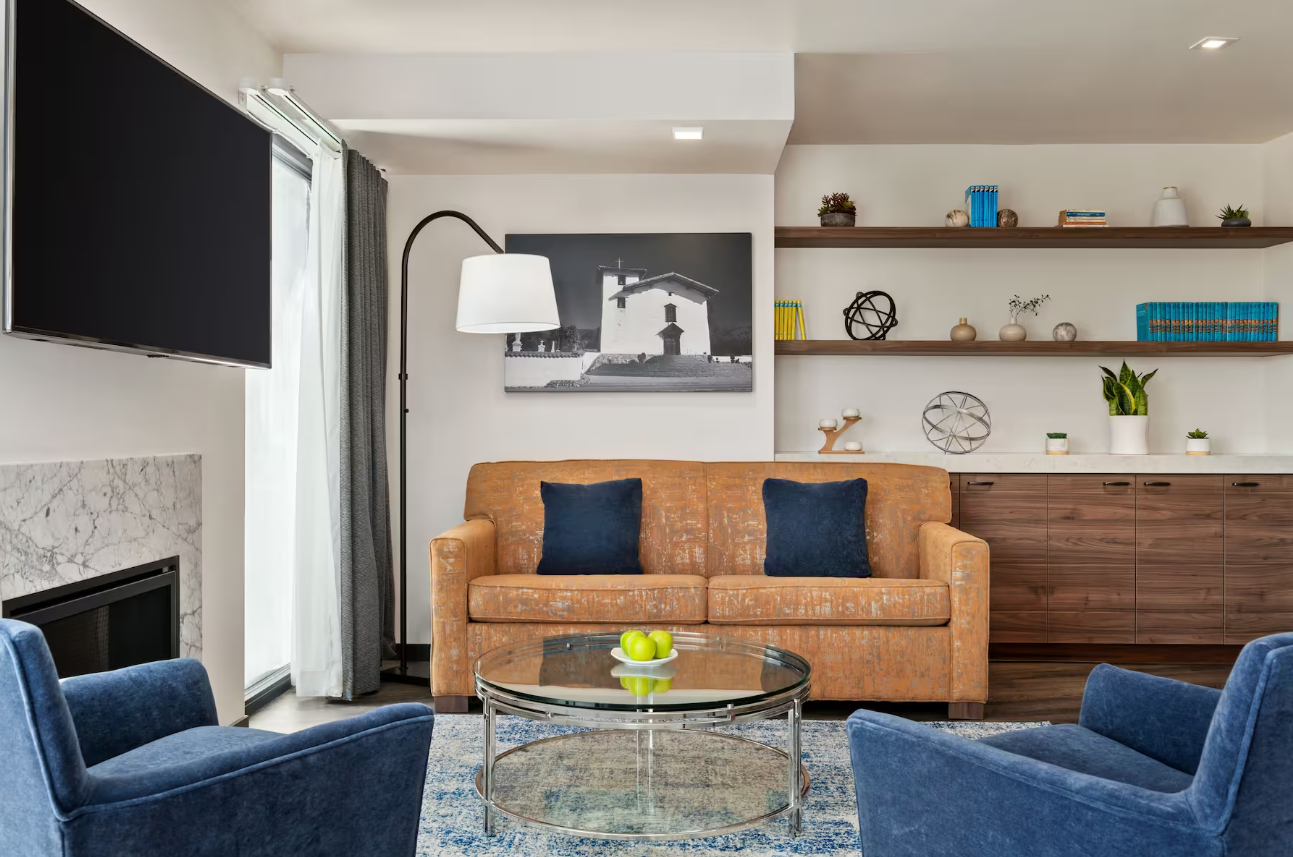
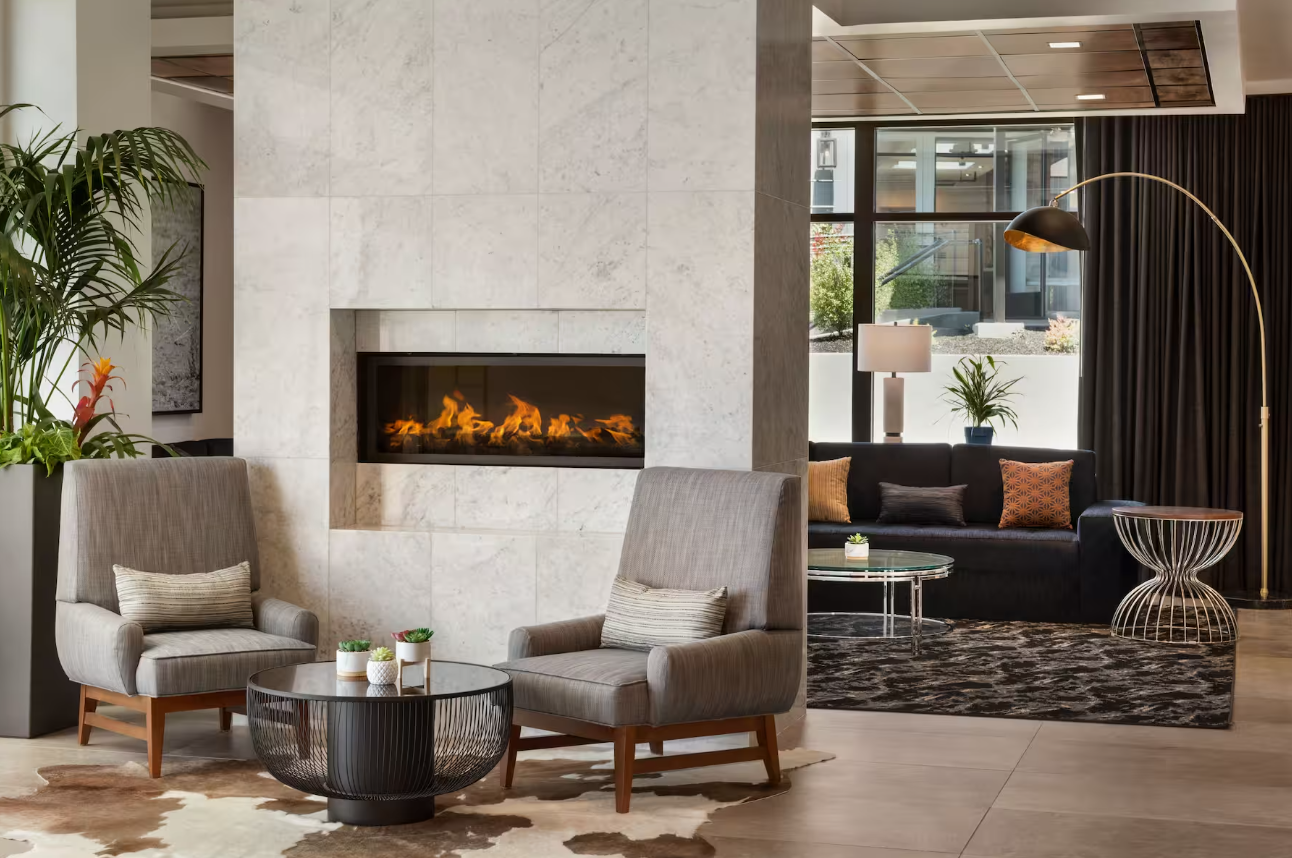
The La Quinta, located in San Luis Obispo, California, isn't just a place to stay; it's an experience crafted with passion and precision. From concept to reality, we handled the interior design, procurement.
Where Does Custom Pay Off Most? Location. Location. Location.
Not every project benefits equally from a push toward design distinction. Context matters a lot.
Resort and leisure markets are where custom aesthetics carry the highest premium. Guests traveling to a coastal destination or mountain market are buying an experience tied to place. A property that looks like it could be anywhere is a real missed opportunity, and in these markets, guests notice. Research consistently shows that travelers in 2024 and 2025 are prioritizing authenticity and local immersion above almost everything else. The global lifestyle hotel market was valued at $68.3 billion in 2024 and is projected to reach $123.3 billion by 2033, fueled precisely by this kind of demand.
Urban adaptive reuse projects are another strong case. A converted warehouse or historic building carries inherent design capital that a cookie-cutter prototype would actively work against. Brands are increasingly recognizing this. IHG's acquisition and U.S. expansion of Ruby Hotels in 2025 was built explicitly around urban lifestyle properties where design authenticity isn't a nice-to-have, it's the value proposition.
Select-service and extended-stay products in secondary markets are where the calculus shifts. Here, the brand's occupancy advantage is more decisive, the guest is less experience-driven, and design investment tends to have lower returns. Compliance is often the smarter priority. That said, even here, thoughtful FF&E selection can reduce long-term replacement costs and improve guest perception scores without touching a single brand standard. We see that pay off for owners again and again.
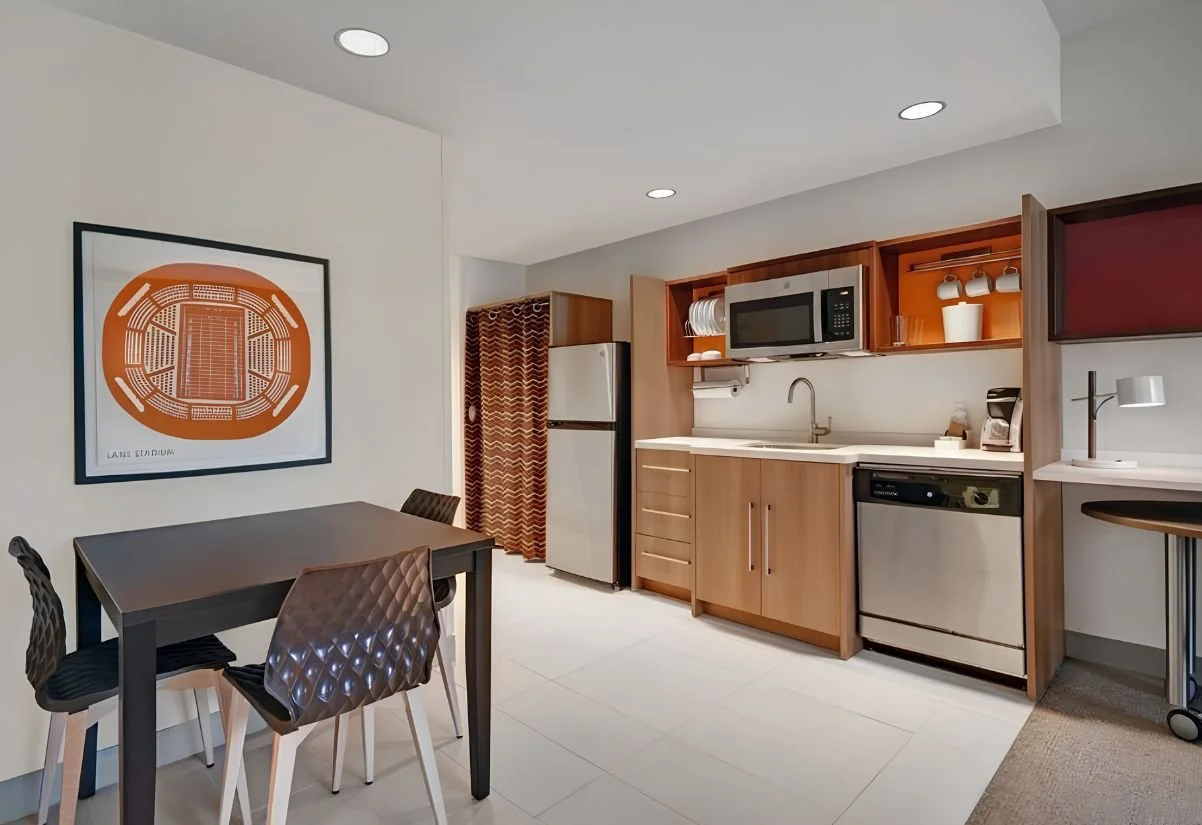
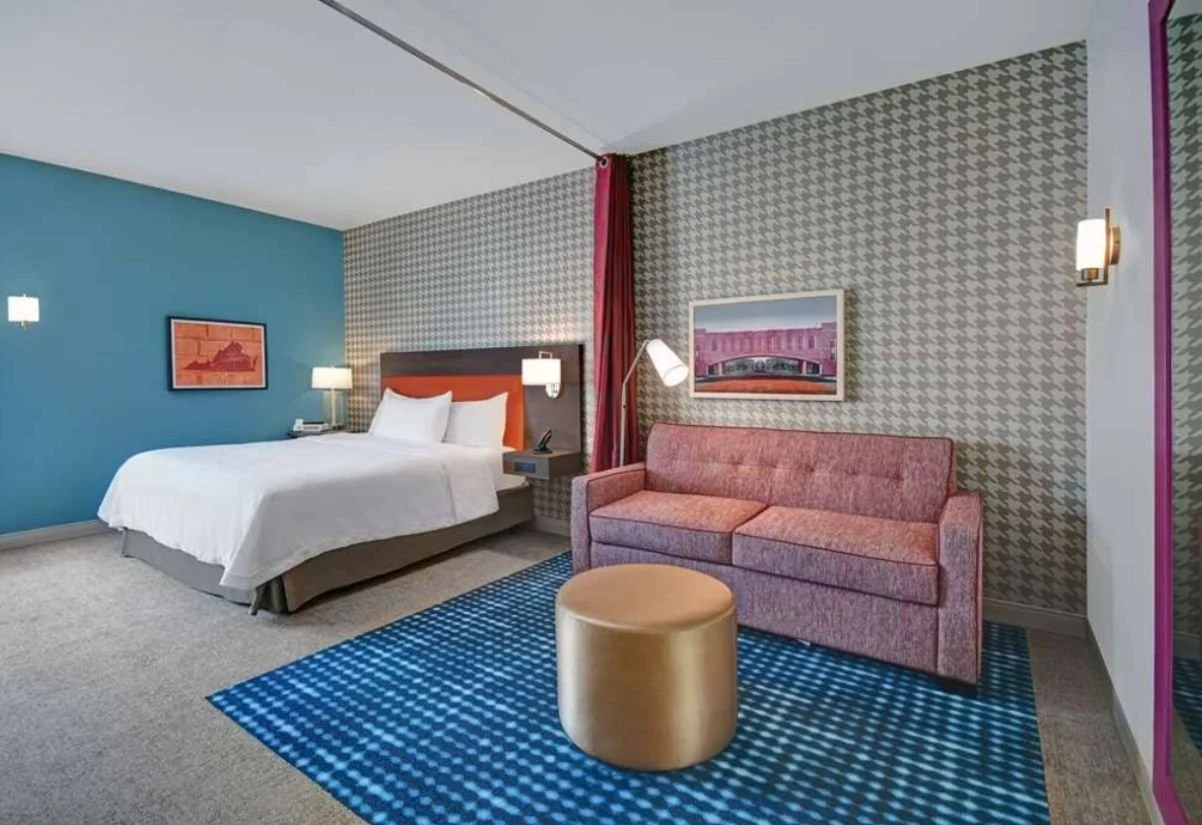
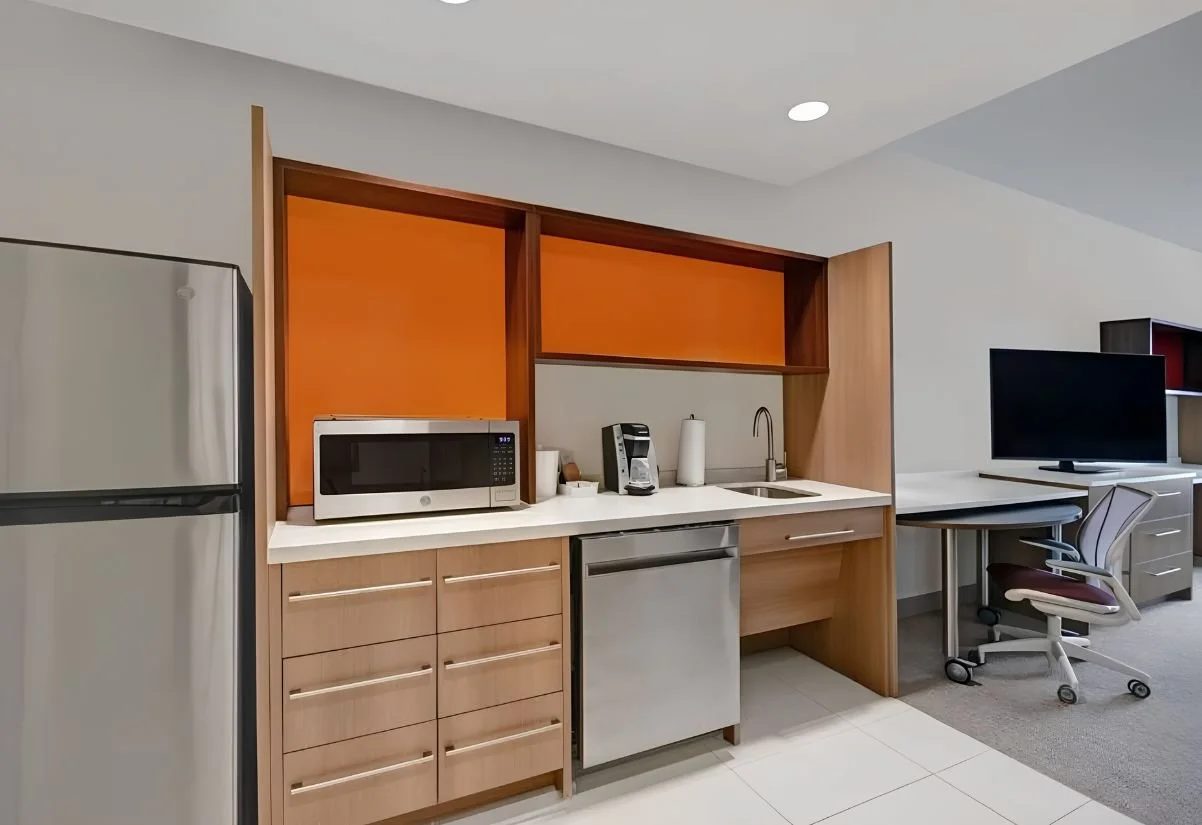
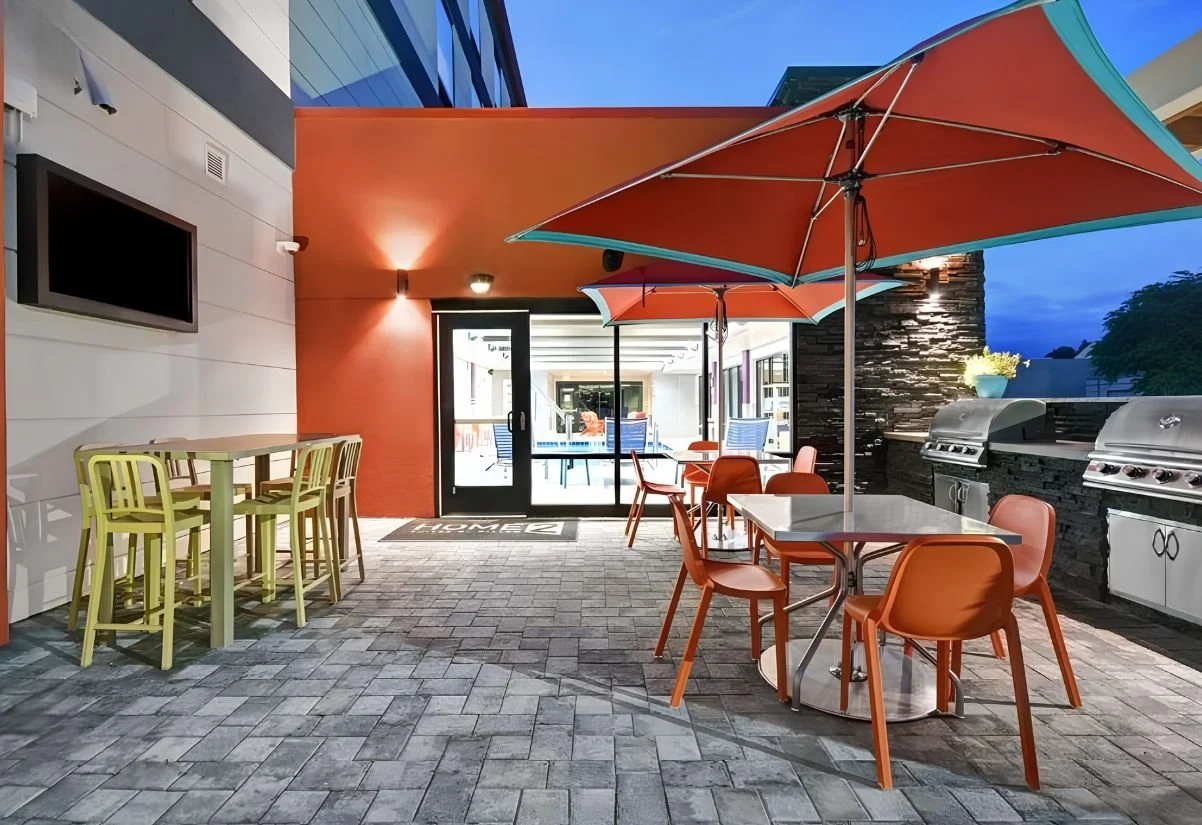
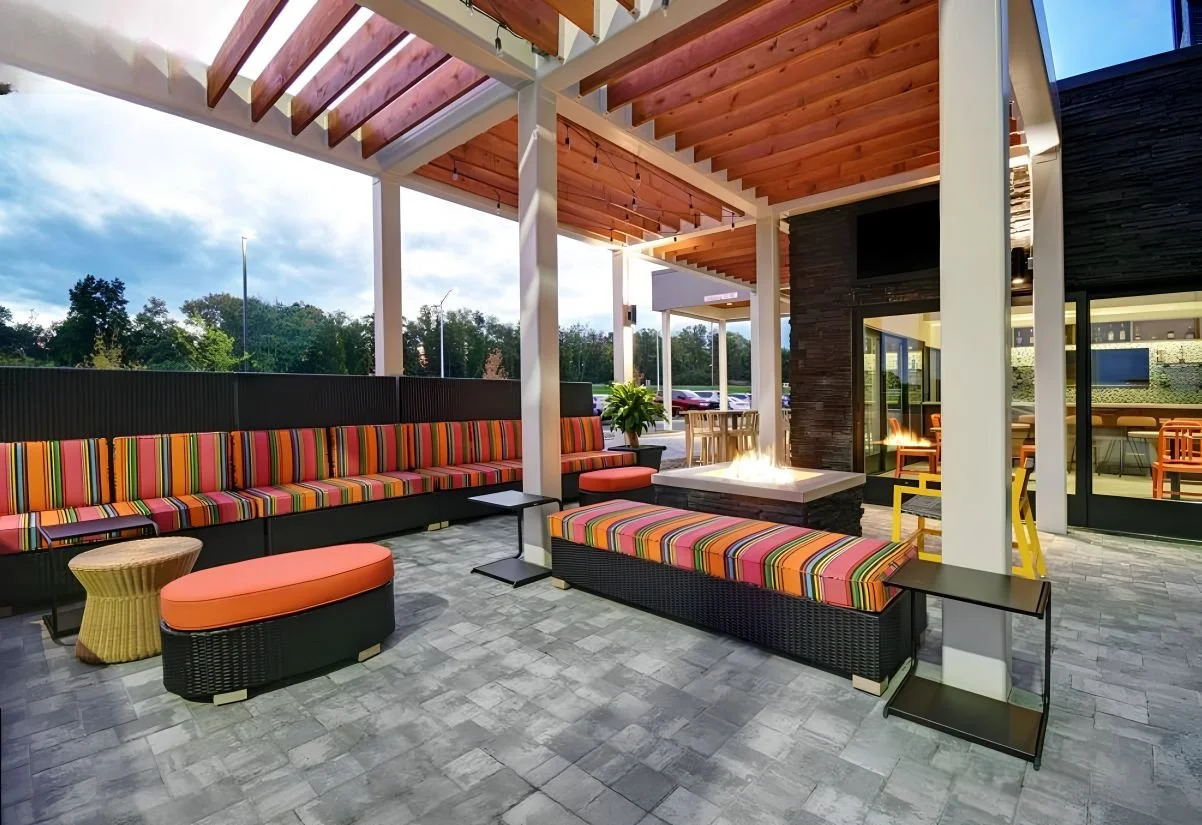
This Home2 Suites in Blacksburg, Virginia brings a playful home-away-from-home feel with a tasteful nod to Virginia Tech's maroon and burnt orange. Furniture Industries handled the interior design and procurement for the property.
How to Work the System Without Fighting It
For developers and owners navigating this every day, here's the approach we've seen work consistently, and the one we bring to every project.
Know the standard before you push against it. The developers who get the best design outcomes within brand systems are the ones who've read the standards carefully enough to know what's truly fixed and what's genuinely flexible. Assumptions cost money. As an Approved Purchasing Agent for IHG Hotels & Resorts and a Procurement Services Provider for Hilton, we bring that institutional knowledge. Fewer revision cycles, fewer compliance surprises late in the project, and a procurement process that moves with confidence from day one.
Source creatively within approved categories. Brand standards specify performance criteria and often material categories. They rarely mandate a single SKU. Our procurement team can source FF&E that meets every technical specification while still expressing a design point of view that's specific to your property and your market. That's where the real differentiation happens, and it's something we take a lot of pride in.
Use the procurement process as a design instrument. FF&E selection isn't just a compliance exercise, it's one of the most powerful tools you have for building a property that feels distinct. Material quality, finish variation, custom millwork, local art integration: these are the details guests absorb without even knowing it, and the ones that drive the kind of emotional connection that translates into loyalty and rate. We design and procure with that purpose in mind on every project.
Build the brand relationship. Franchisors aren't adversaries in this process. The best owner-franchisor relationships involve early design conversations, shared understanding of what the owner is trying to achieve, and a procurement partner who speaks both languages fluently. That's a role we take seriously.
The Best Properties Don't Choose Between Brand and Design. They Master Both.
The most successful hotel assets of the next decade won't be the ones that chose between brand and design. They'll be the ones that understood brand standards well enough to work within them creatively, sourcing and specifying with enough intelligence to build properties that feel genuinely of their place, without sacrificing the distribution and loyalty advantages that make a brand flag worth flying in the first place.
We've spent 50 years helping developers and owners get there. We'd love to help with your next project.
Furniture Industries works with hotel developers and owners as an Approved Purchasing Agent for IHG Hotels & Resorts, providing end-to-end FF&E procurement solutions that balance brand compliance with design excellence. Contact us to learn more about how we approach this for every project.